Here’s a reality check that might sting: your carefully crafted resume is probably sitting in a pile with hundreds of others that look exactly the same.
For decades, the one-page resume was the golden ticket. List your jobs, bullet point your accomplishments, maybe add a splash of design if you’re feeling bold. Send it out. Wait. And hope someone notices.
That worked—when there were fewer applicants, fewer channels, and hiring managers had time to read every submission carefully.
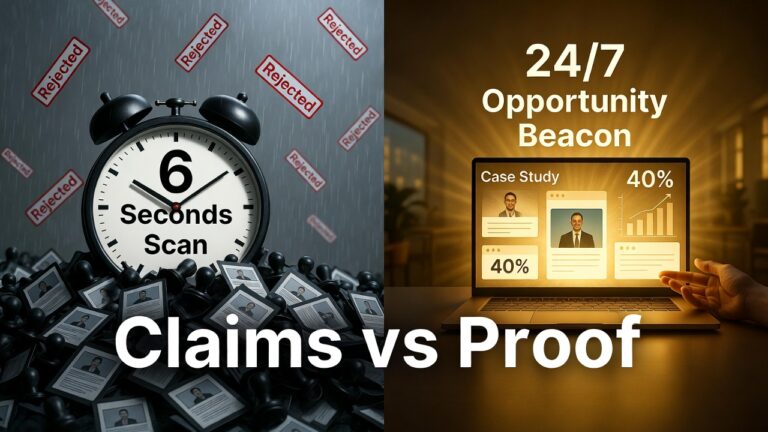
But we’re in 2026 now. Recruiters spend an average of six seconds scanning a resume. AI tools are filtering applications before human eyes ever see them. And here’s the kicker: everyone’s resume sounds the same because everyone’s using the same AI tools to write them.
So how do you stand out? You stop telling people what you can do, and you start showing them.
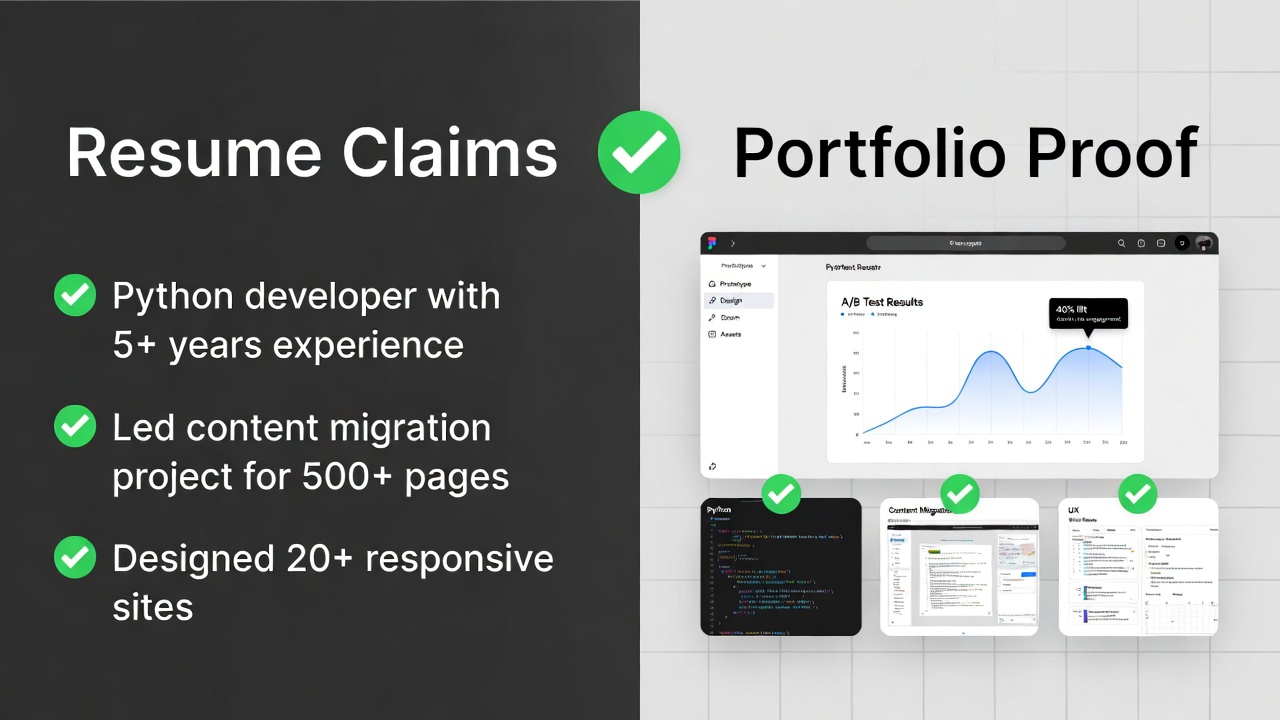
The Resume is a Claim. A Portfolio is Proof.
Think about the difference between these two approaches:
The Resume Says: “Experienced in UX design with a track record of improving user engagement.”
The Portfolio Shows: A case study walking through your research process, the wireframes you created, the A/B tests you ran, and the 40% improvement in conversion you achieved—with screenshots, prototypes, and your reasoning at every step.
One is a claim anyone can make. The other is evidence that’s impossible to fake.
In an era where AI can generate impressive-sounding bullet points in seconds, employers have become rightfully skeptical of claims. They want proof. They want to see your thinking process, your methodology, and your actual results.
A portfolio transforms you from a list of assertions into a credible professional with receipts.
The Rise of Skills-Based Hiring
Here’s what’s changed in the hiring landscape: degrees are losing their gatekeeping power.
By 2026, the majority of companies have shifted toward skills-based hiring. They care less about where you went to school and more about whether you can actually do the job. This is great news for talented people without traditional credentials—but it means you need a way to demonstrate those skills.
An online portfolio lets you:
- Prove specific competencies: Show your proficiency with tools like Figma, Python, HubSpot, or whatever your field demands—through actual projects, not just keywords
- Quantify your impact: Use real data and visuals to demonstrate how your work moved the needle
- Display range and depth: Show that you can handle different types of challenges, not just one narrow slice
When a recruiter is choosing between a resume that claims Python expertise and a portfolio that includes three documented projects with code samples and results—which do you think gets the interview?
Your 24/7 Career Ambassador
Here’s something most people overlook: a resume only works when you actively send it to someone.
A digital portfolio works while you sleep.
With proper optimization, your portfolio becomes discoverable by recruiters, clients, and collaborators searching for exactly what you offer. Instead of sending out applications and hoping, you create a beacon that attracts opportunities.
Think about it:
- A marketing director searches “freelance content strategist healthcare”
- Your portfolio appears because you’ve documented your healthcare content projects
- They reach out to you
This isn’t theoretical. It’s happening every day to professionals who’ve built their online presence strategically. Passive opportunity generation isn’t just for influencers—it’s for anyone with valuable skills and a place to showcase them.
Personal Branding in the Portfolio Economy
The traditional career path—one employer, linear progression, gold watch at retirement—is mostly fiction now. The reality for most professionals involves:
- Multiple income streams
- Career pivots
- Freelance work alongside employment
- Skills that span industries
In this “portfolio career” era, you need a central hub that defines who you are. Your online portfolio becomes that hub—a place where your various professional identities come together into a coherent story.
“Digital relevance is the new currency of trust.”
Your portfolio isn’t just a collection of work samples. It’s where you can inject personality into your professional identity. Your “About” page tells the story of your career pivots, your passions, and your unique perspective. It transforms you from another name in a database into a human being with a point of view.
How to Build a Portfolio ? (Even If You're Not Technical)
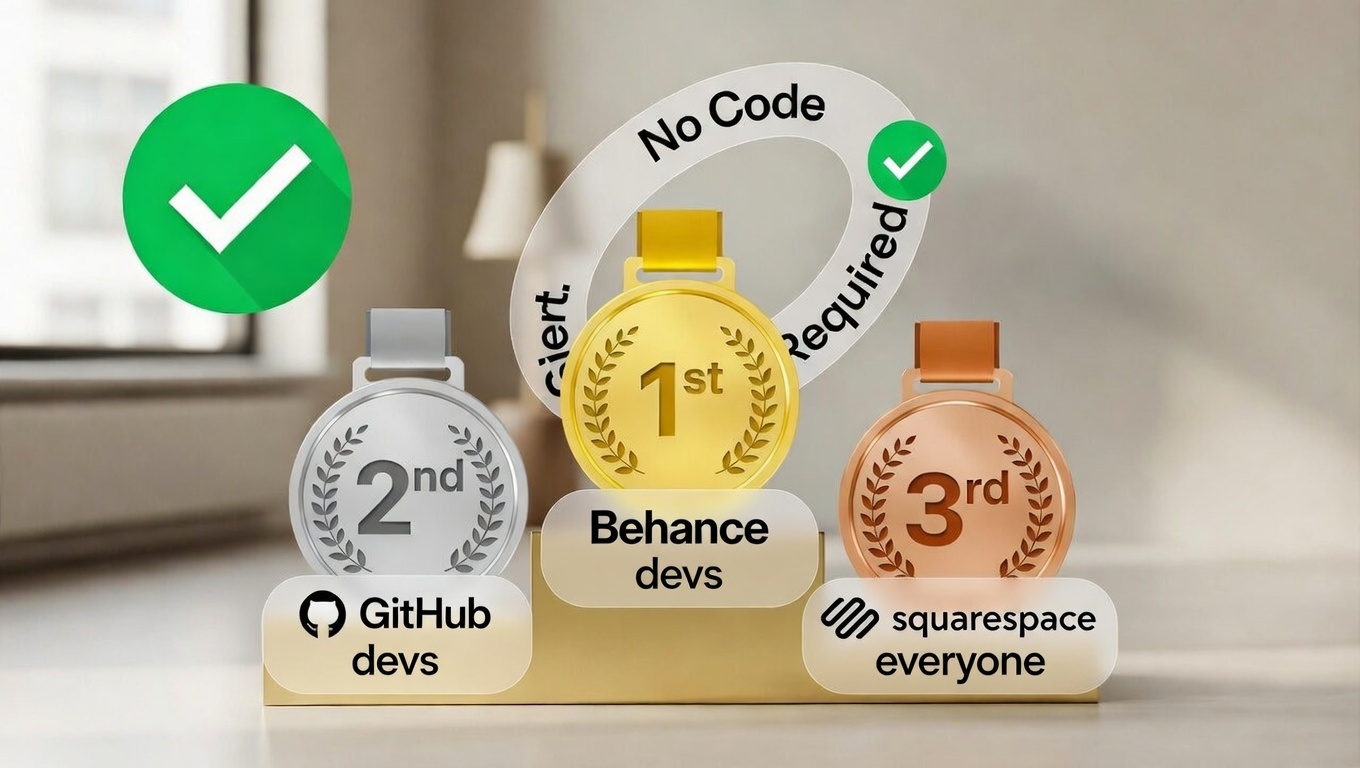
Here’s the good news: you don’t need to code or hire a designer to create a professional portfolio.
The barrier to entry has essentially disappeared. Depending on your field, here are your best options in 2026:
For Creative Professionals
- Behance or Adobe Portfolio for designers and visual artists
- Dribbble for UI/UX work
- Cargo for photographers and artists wanting more customization
For Writers and Marketers
- Clippings.me for journalists and content creators
- Medium for thought leadership (though you’ll want your own site too)
- WordPress or Squarespace for full control over your brand
For Developers
- GitHub (essential—not optional)
- Read.cv for a more polished presentation
- A custom-built site using Astro, Next.js, or whatever framework showcases your skills
For Everyone Else
- Bento.me or similar link-in-bio tools for a quick start
- LinkedIn’s Featured section (curated thoughtfully)
- Notion or Carrd for simple, professional pages
The platform matters less than the content. Start with what’s easy, and upgrade as your needs evolve.
What Makes a Portfolio Actually Work ?
Having a portfolio isn’t enough. Having a good portfolio is what separates you from the crowd. Here’s what matters:
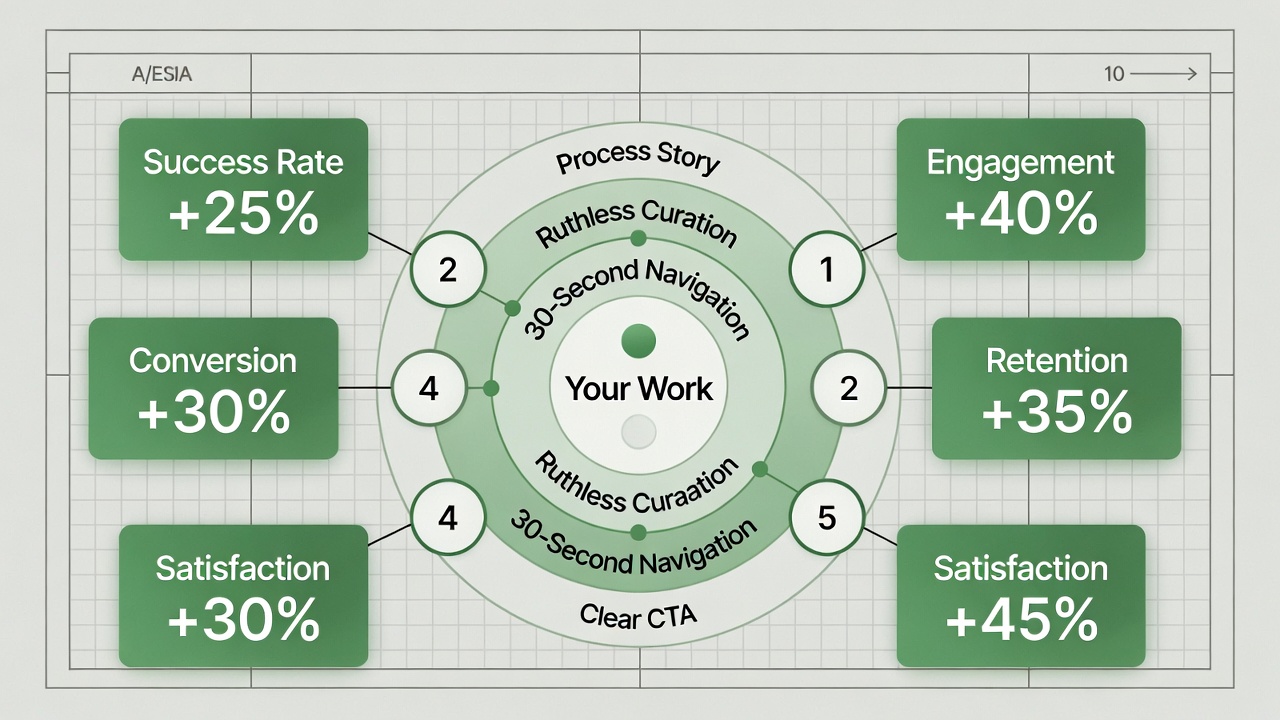
Show Your Process, Not Just Results
Anyone can show a finished product. What makes you valuable is how you got there. Document your thinking, the problems you encountered, the decisions you made, and why.
Curate Ruthlessly
Your portfolio isn’t a graveyard for everything you’ve ever done. Choose your best work—the pieces that represent where you want to go, not just where you’ve been. Quality beats quantity every time.
Make It Easy to Navigate
Recruiters are busy. Clients are impatient. If someone can’t understand what you do and see relevant examples within 30 seconds, you’ve lost them.
Keep It Current
A portfolio with projects from three years ago signals that you’ve stagnated. Add new work regularly, even if it means removing older pieces.
Include a Clear Call to Action
What do you want visitors to do? Contact you? Download your resume? Follow you? Make it obvious.
The Cost of Waiting
Every day without a portfolio is a day of missed opportunities. While you’re perfecting your resume, competitors are getting discovered through their online presence. While you’re debating which platform to use, someone less qualified is landing the role because they made their work visible.
The best time to build a portfolio was five years ago. The second best time is today.
And here’s the thing: your first version doesn’t need to be perfect. Start with three pieces of your best work. Add a brief bio. Publish it. You can iterate and improve from there.
Done is better than perfect when perfect means invisible.
Frequently Asked Questions
Why is an online portfolio important in 2026? An online portfolio is essential because it provides proof of your skills rather than just claims. In an era of AI-generated resumes and skills-based hiring, employers want to see actual work samples, documented processes, and real results. A portfolio also works as a passive opportunity generator, making you discoverable to recruiters and clients 24/7.
What should I include in a professional portfolio? Include your best work samples with context about your process and results. Add case studies showing how you approached problems and what you achieved. Include a professional bio, clear navigation, and a way for visitors to contact you. Focus on quality over quantity—five excellent pieces beat twenty mediocre ones.
Do I need to know how to code to build a portfolio? No. Platforms like Squarespace, Behance, Adobe Portfolio, and even LinkedIn’s Featured section let you create professional portfolios without any technical skills. The barrier to entry is essentially zero—if you can post on social media, you can build a portfolio.
How is a portfolio different from a resume? A resume lists claims about your experience and skills. A portfolio provides evidence by showing actual work. Resumes tell; portfolios show. In 2026’s competitive job market, having both is important, but the portfolio often makes the difference between getting an interview and getting overlooked.
How often should I update my portfolio? Review your portfolio every few months and add new projects as you complete them. Remove outdated work that no longer represents your current skill level. An active, current portfolio signals that you’re engaged and growing professionally, while a stale portfolio can suggest stagnation.
Can a portfolio help me get clients, not just jobs? Absolutely. A well-optimized portfolio can attract freelance clients and consulting opportunities by making you discoverable when people search for your specific expertise. Many professionals build entire businesses from inbound leads generated by their portfolio’s visibility.
Ready to build a professional presence that attracts opportunities? AI Marketing Technology helps professionals and businesses create AI-optimized content that gets noticed—by both humans and the algorithms that surface talent.
