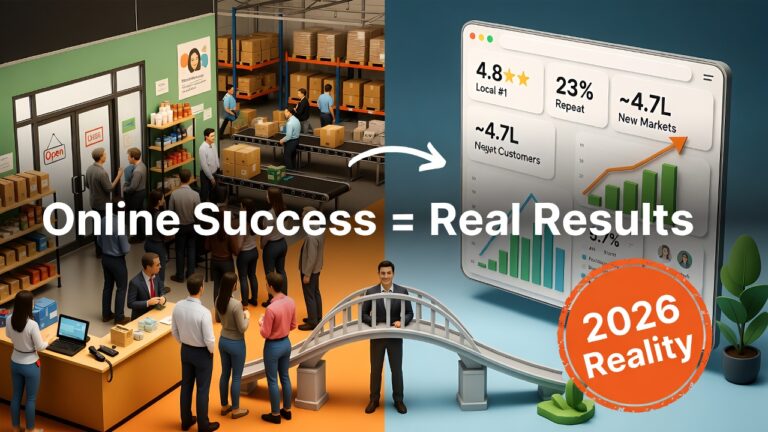
In the physical world, success is easy to spot. A line out the door. A busy warehouse. A phone that won’t stop ringing.
But in the digital world? Success looks different—and it changes as your business grows.
A thriving Instagram account with thousands of followers isn’t success if it’s not generating customers. A beautiful website isn’t a success if nobody can find it. And “going viral” definitely isn’t a success! if it attracts the wrong audience.
So what does online success actually look like for small and medium-sized businesses in 2026?
The answer depends on your scale—and understanding what’s appropriate for your stage matters more than chasing metrics designed for companies ten times your size.
For Small Businesses: Building a Foundation
If you’re running a small business (roughly 1-50 employees), online success isn’t about dominating global markets. It’s about three things: legitimacy, community, and conversion.
Success Metric #1: The Digital Storefront
Can people find you online—and do they trust what they find?
What success looks like:
- A professional, mobile-responsive website that functions as your 24/7 salesperson
- An active Google Business Profile with a 4.5+ star rating
- Consistent NAP (Name, Address, Phone) information across all directories
- Pages that load fast and work perfectly on phones
Why it matters: When someone hears about your business, the first thing they do is search for you. If they find an outdated website, conflicting information, or bad reviews, you’ve lost them before they ever made contact.
Success Metric #2: Micro-Community Engagement
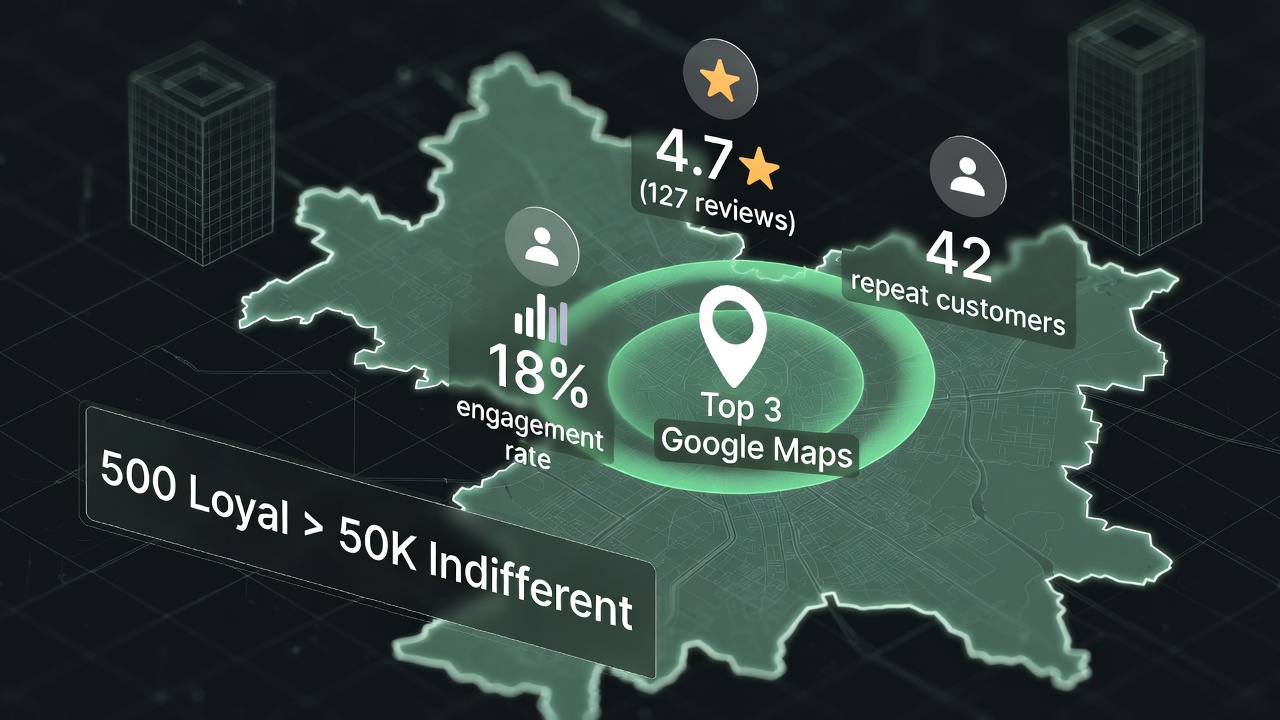
You don’t need a million followers. You need 500 people who actually care.
What success looks like:
- An engaged social media following that comments, shares, and (most importantly) buys
- User-generated content from happy customers
- Repeat customers who refer their friends
- Email subscribers who open your messages
Why it matters: A small, loyal community is worth more than a large, indifferent audience. Engagement beats reach every time for businesses selling real products and services.
Success Metric #3: Efficiency Through Automation
For small teams, time is the rarest resource.
What success looks like:
- Automated welcome emails that nurture new leads
- Scheduled social posts that maintain presence without constant attention
- Chatbots handling basic inquiries 24/7
- Booking systems that eliminate back-and-forth scheduling
Why it matters: Success means the owner can focus on the craft of the business, not the keyboard. Technology should create leverage, not more work.
Success Metric #4: Hyper-Local Dominance
If you serve a local area, owning that area online is everything.
What success looks like:
- Appearing in the “Top 3” Google Map results for your primary services
- Dominating local search queries for your category
- Being the automatic answer when AI assistants recommend businesses nearby
Why it matters: You don’t need to beat national competitors. You need to beat the other three plumbers (or dentists or restaurants) in your zip code.
For Medium Businesses: Scaling and Optimization
When you grow beyond 50 employees, the focus shifts from survival to market share, data-driven growth, and operational agility.
Success Metric #1: Omnichannel Mastery
The customer journey should feel seamless across every touchpoint.
What success looks like:
- Customers can start on Instagram, continue on your website, and complete a purchase via email—with data following them smoothly
- Consistent brand experience regardless of how someone interacts with you
- Marketing attribution that tracks the full journey, not just the last click
Why it matters: At medium scale, customers interact with you in multiple ways. Success means those interactions feel connected, not fragmented.
Success Metric #2: Data as Strategy Backbone
“Gut feeling” isn’t a strategy anymore.
What success looks like:
- Decisions driven by Customer Lifetime Value (CLV) and acquisition cost analysis
- Marketing budget allocated based on data, not tradition
- A/B testing as standard practice, not occasional experiments
- Clear understanding of which channels drive profitable customers
Why it matters: At scale, intuition isn’t enough. The businesses that win are the ones who know their numbers and act on them.
Success Metric #3: Geographic Expansion
Online success often means breaking physical boundaries.
What success looks like:
- 20-30%+ of revenue coming from outside your original market
- Successful entry into new regions or demographics
- Digital advertising that efficiently reaches new audiences
- Brand recognition beyond your home territory
Why it matters: The internet removes geography as a constraint. Medium businesses succeeding online are the ones leveraging that freedom.
Success Metric #4: Internal Digital Transformation
Online success isn’t just customer-facing.
What success looks like:
- Teams using integrated CRMs and project management tools
- Information flowing freely instead of trapped in silos
- Digital fluency throughout the organization, not just the marketing department
- Processes documented and systematized for consistency
Why it matters: Internal digital maturity enables external digital performance. You can’t run sophisticated online marketing with spreadsheets and sticky notes.
The Digital Maturity Journey
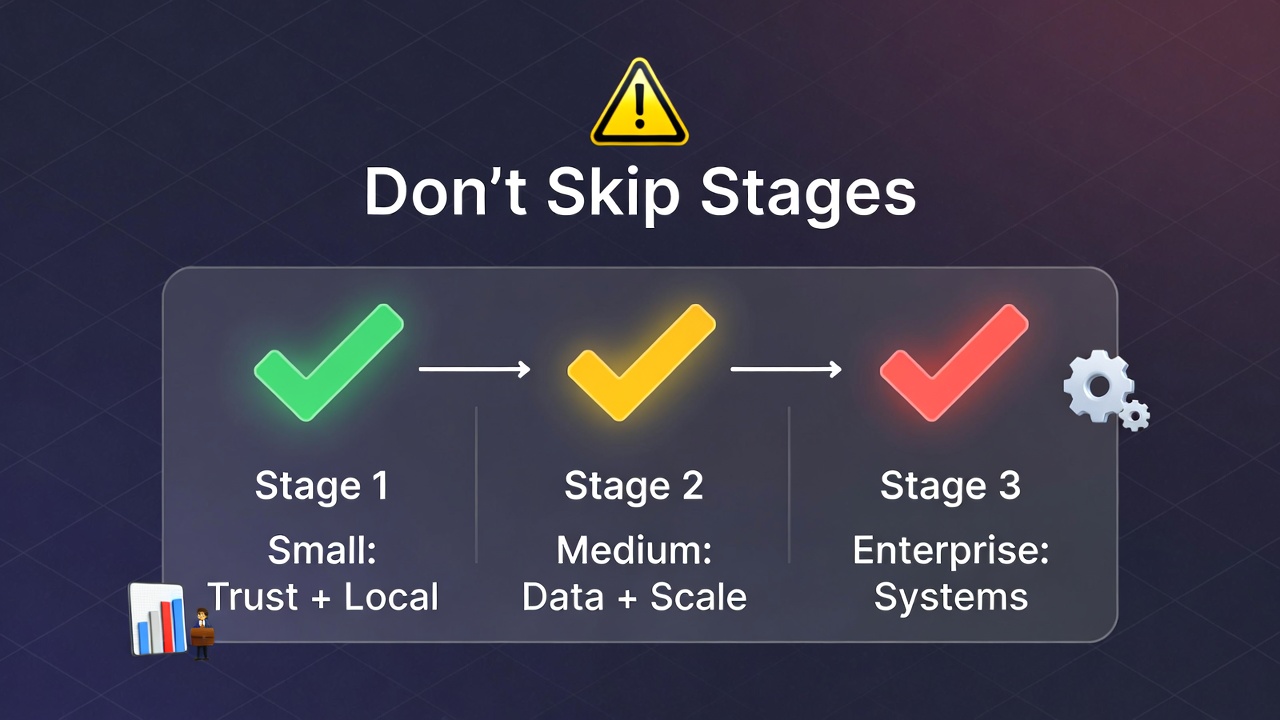
Here’s what most businesses miss: Success metrics should match maturity level.
A small business chasing enterprise-level metrics will waste resources and feel like a failure. An established company measuring success by small-business standards will miss growth opportunities.
Metric | Small-Scale Success | Medium-Scale Success |
Primary Goal | Building trust & legitimacy | Market dominance & efficiency |
Content Strategy | Personal, authentic, relatable | Educational, authoritative, comprehensive |
Tech Focus | Simple, low-cost, easy to use | Integrated systems with deep analytics |
Conversion Focus | Direct sales, immediate transactions | Lead nurturing, retargeting, lifetime value |
Social Proof | Reviews and testimonials | Case studies and data-driven results |
Customer Relationship | Personal touch, owner involvement | Systematic processes, team-based support |
Universal Success Metrics for 2026
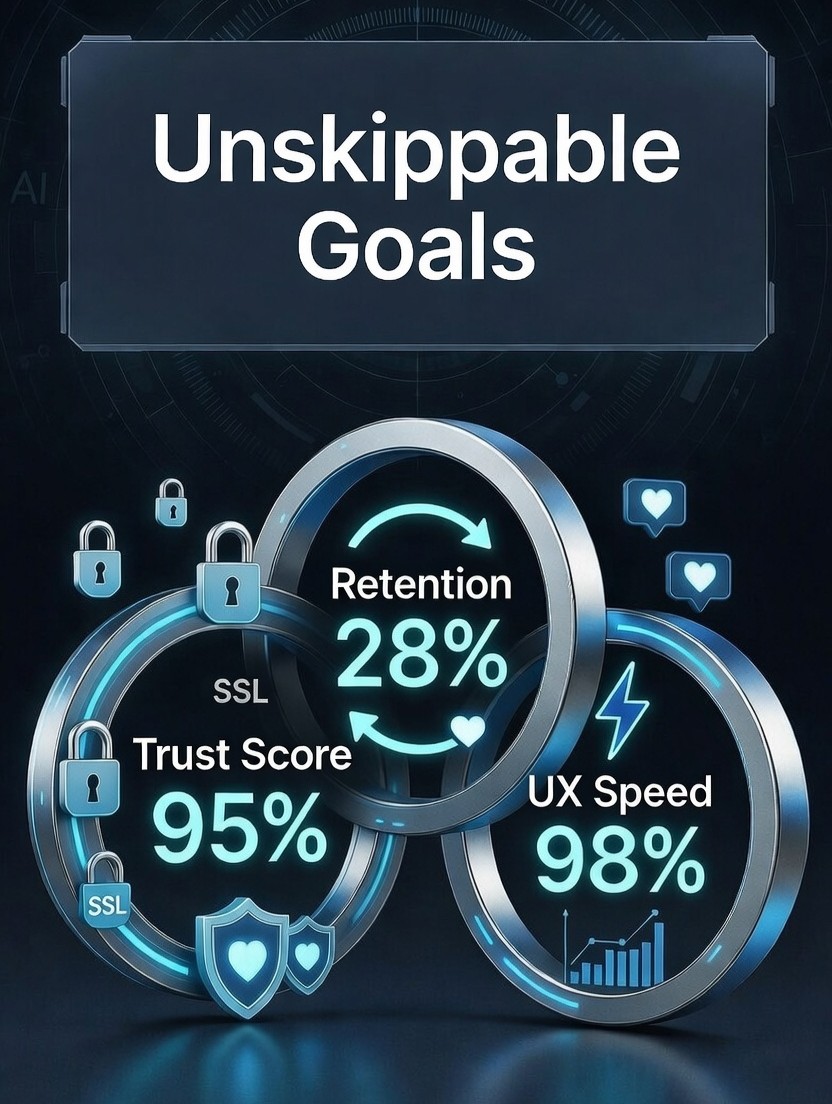
Regardless of business size, three pillars define online success in today’s environment:
1. Trust Score
High-security badges, transparent privacy policies, and visible credibility signals aren’t optional—they’re essential for conversion.
Measure: SSL implementation, security badge visibility, privacy policy clarity, trust elements on conversion pages.
2. Retention Rate
In a high-cost acquisition world, keeping existing customers is more profitable than finding new ones.
Measure: Customer return rate, subscription renewal rates, repeat purchase frequency, churn percentage.
3. Speed & UX
A 1-second delay in page load can drop conversions by 7%. Success requires a lightning-fast, frictionless experience.
Measure: Core Web Vitals scores, page load times, mobile usability, conversion path friction points.
The Overlooked Success Factor: AI Visibility
In 2026, there’s a new dimension to online success that didn’t exist three years ago: How visible is your business to AI systems?
When someone asks ChatGPT for a recommendation, does your business come up? When Google’s AI Overview answers a query in your industry, are you cited? When voice assistants respond to local queries, do they mention you?
What AI visibility success looks like:
- Being cited in AI-generated responses for relevant queries
- Appearing in Google AI Overviews for your specialty
- Getting recommended by conversational AI tools
- Structured content that AI systems can easily parse and reference
This is GEO (Generative Engine Optimization), and it’s quickly becoming as important as traditional SEO.
The Uncomfortable Truth About Online Success
Here’s what nobody wants to admit: Online success takes longer than you think, and looks different than you expected.
It’s not:
- Going viral overnight
- Millions of followers
- Getting featured by influencers
- One killer campaign that changes everything
It’s:
- Consistent presence over months and years
- Steady growth in the metrics that matter for your business
- Compounding improvements that build on each other
- Systems that work reliably without constant attention
The businesses that succeed online treat digital presence as infrastructure, not lottery tickets.
How AI Marketing Technology Defines Success?
At AI Marketing Technology, we measure client success differently based on business scale:
For Small Businesses:
- Local search dominance in your service area
- Review acquisition and management
- Website that converts visitors to leads
- Automation that saves owner time
For Medium Businesses:
- Multi-channel attribution and optimization
- Scalable lead generation systems
- Geographic or demographic expansion
- Efficiency improvements that compound over time
For All Clients:
- Clear connection between marketing investment and business outcomes
- AI visibility alongside traditional search performance
- Systems designed for long-term growth, not short-term spikes
- Honest assessment of what’s working and what isn’t
Success isn’t one-size-fits-all. It’s defined by your goals, your stage, and your definition of winning.
The Bottom Line
Small businesses succeed by being personal and present—building legitimacy, engaging a loyal community, and dominating their local market.
Medium businesses succeed by being precise and persistent—leveraging data, optimizing systems, and expanding their reach.
Both succeed by focusing on what actually matters for their stage, rather than chasing metrics designed for someone else.
The question isn’t “Am I successful online?” It’s “Am I succeeding at the right things for where my business is today?”
Frequently Asked Questions
What online metrics matter most for small businesses? Small businesses should prioritize: Google Business Profile ranking and reviews, website conversion rate, local search visibility, and customer acquisition cost. Vanity metrics like follower counts matter far less than engaged community and actual conversions.
How do I know if my business is ready to scale online marketing efforts? You’re ready to scale when: your foundation is solid (website converts, profiles are optimized), you have clear data on what works, you’ve maximized organic opportunities, and you have the budget to test new channels. Scaling before the foundation is set wastes resources.
What’s the difference between small business and medium business online strategies? Small businesses should focus on legitimacy, local dominance, and personal engagement. Medium businesses should focus on omnichannel consistency, data-driven optimization, and systematic processes. The tools and tactics differ based on scale and resources.
How long does it take to see online marketing success? Expect 3-6 months to see meaningful traction, 6-12 months for consistent results, and 12-24 months for compounding growth. Quick wins are possible but sustainable success requires patience and consistency. Beware anyone promising overnight transformation.
Is social media success important for B2B businesses? Yes, but the platforms and metrics differ. B2B success typically happens on LinkedIn rather than Instagram, focuses on thought leadership rather than engagement, and measures leads generated rather than follower growth. The principles of online success apply; the tactics adjust.
What is AI visibility and why does it matter? AI visibility refers to how often your business is cited, mentioned, or recommended by AI systems like ChatGPT, Google AI Overviews, and voice assistants. As more users get answers from AI rather than clicking through search results, being visible to these systems becomes essential for discovery.
Ready to define what online success looks like for your business? Contact AI Marketing Technology to discuss strategies matched to your scale and goals.
