
The “AI race” in digital marketing has officially moved past the hype phase. We’re no longer asking if AI will change marketing. We’re watching it happen in real time.
As we settle into 2026, the landscape looks nothing like the speculation from just two years ago. The winners are emerging across three distinct arenas—and understanding which race matters for your business might be the most important strategic decision you make this year.
Let’s break down who’s winning, who’s struggling, and where the opportunities actually lie.
Arena One: The Platform Titans
The biggest winners so far are the companies providing the “brains” behind the marketing. These aren’t just tools anymore—they’re the operating systems of digital marketing itself.
Google (Alphabet)
With Gemini 2.5 and advances in AI-powered search, Google has transformed from a search engine into a Discovery Engine. AI Overviews now appear in the majority of search results, fundamentally changing how users find information.
What this means for marketers: Brands winning here are using Generative Engine Optimization (GEO) to ensure their products and services are the ones recommended in AI-generated responses—not just ranked in traditional results.
Meta
Mark Zuckerberg’s massive AI investments have paid off. Meta AI now operates as a native assistant within Instagram, WhatsApp, and Facebook, enabling brands to move from static ads to automated conversations that answer questions, handle objections, and close sales without a human representative.
What this means for marketers: The brands winning on Meta are the ones building conversational AI experiences that feel helpful, not pushy.
Microsoft
Copilot is everywhere—integrated into Windows, Edge, Office, and LinkedIn. Microsoft has positioned itself as the AI layer for professional work, with deep implications for B2B marketing and content discovery.
What this means for marketers: Content optimized for Copilot’s recommendations reaches users while they’re actively working, not passively scrolling.
Adobe
Following its acquisition strategy, Adobe has created a “closed-loop” system where AI creates the creative (Firefly), optimizes distribution, and measures ROI in one interface. For enterprise marketers, it’s becoming the default stack.
What this means for marketers: The creative process itself is being automated. Speed-to-market for campaign assets has compressed from weeks to hours.
Arena Two: The Rise of Agentic Marketing
If 2024-2025 was about Generative AI (making content), 2026 is about Agentic AI (taking action).
Here’s the difference:
Generative AI: You prompt a tool to write an email. You review it. You send it.
Agentic AI: You define a goal (“nurture this lead until they book a demo”). An AI agent researches the lead, identifies the right timing, drafts personalized outreach, handles responses, follows up appropriately, and books the meeting—with minimal human intervention.
These aren’t chatbots. These are autonomous systems that execute multi-step workflows.
The New Marketing Role: AI Orchestration Specialist
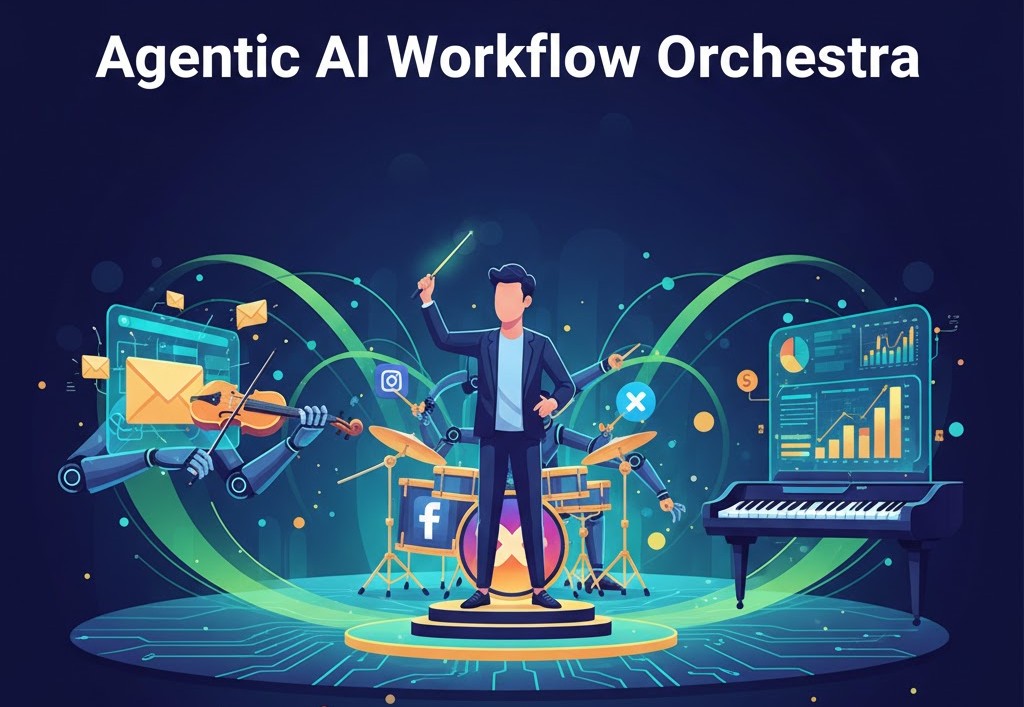
The marketers winning in 2026 aren’t the ones who write the best prompts. They’re the ones who can design workflows where multiple AI agents collaborate to run entire campaigns.
Think of it like conducting an orchestra. Each AI “musician” handles their instrument (email, social, analytics, creative). The orchestrator ensures they play together toward a unified goal.
This skill set barely existed two years ago. Now it’s becoming essential.
Early Adopter Advantages
Agencies and marketing teams that invested early in agentic systems are seeing dramatic efficiency gains:
- Creative cycles that took 8-12 weeks now complete in 2-3 weeks
- Lead nurturing that required dedicated SDRs now runs autonomously
- Content calendars that needed constant management now self-optimize
The efficiency race isn’t about working harder. It’s about designing systems that work for you.
Arena Three: The Human Premium
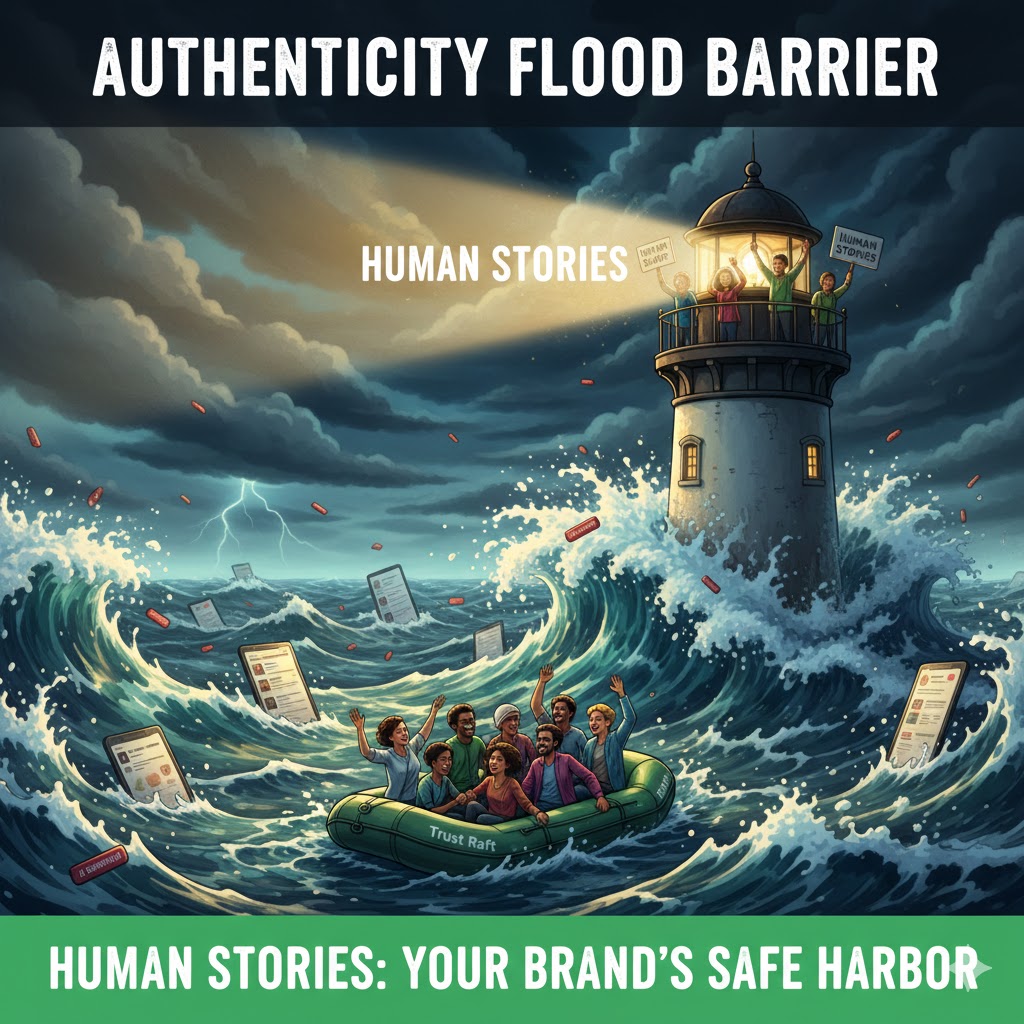
Here’s the plot twist nobody expected: As AI content floods the internet, authenticity has become more valuable than ever.
The web is increasingly filled with what observers call “AI slop”—generic, automated content that technically answers questions but feels hollow. SEO-optimized articles that all say the same thing. Social posts that could have been written by anyone (or anything).
In response, a counter-trend has emerged. *The brands winning customer loyalty are using AI to be more human, not less.
Zero-Click Marketing
Forward-thinking brands have stopped obsessing over website traffic. Instead, they provide so much value directly in AI responses, social feeds, and snippets that they build brand authority without requiring a click.
The goal isn’t “visit our website.” It’s “remember our name when you need this.”
Creator-Led Authenticity
Since AI can generate a perfect face, voice, and persona, consumers are craving unpolished human stories. Brands partnering with real micro-influencers and featuring actual employees are winning the trust that algorithms can’t manufacture.
The imperfections are the point. They signal “this is real.”
Predictive Empathy
The smartest AI implementations sense when a customer is frustrated, confused, or emotionally charged—and hand the conversation off to a human at exactly the right moment.
This isn’t about avoiding AI. It’s about knowing when AI helps and when humanity matters.
The Three Races (And Which One Matters for You)
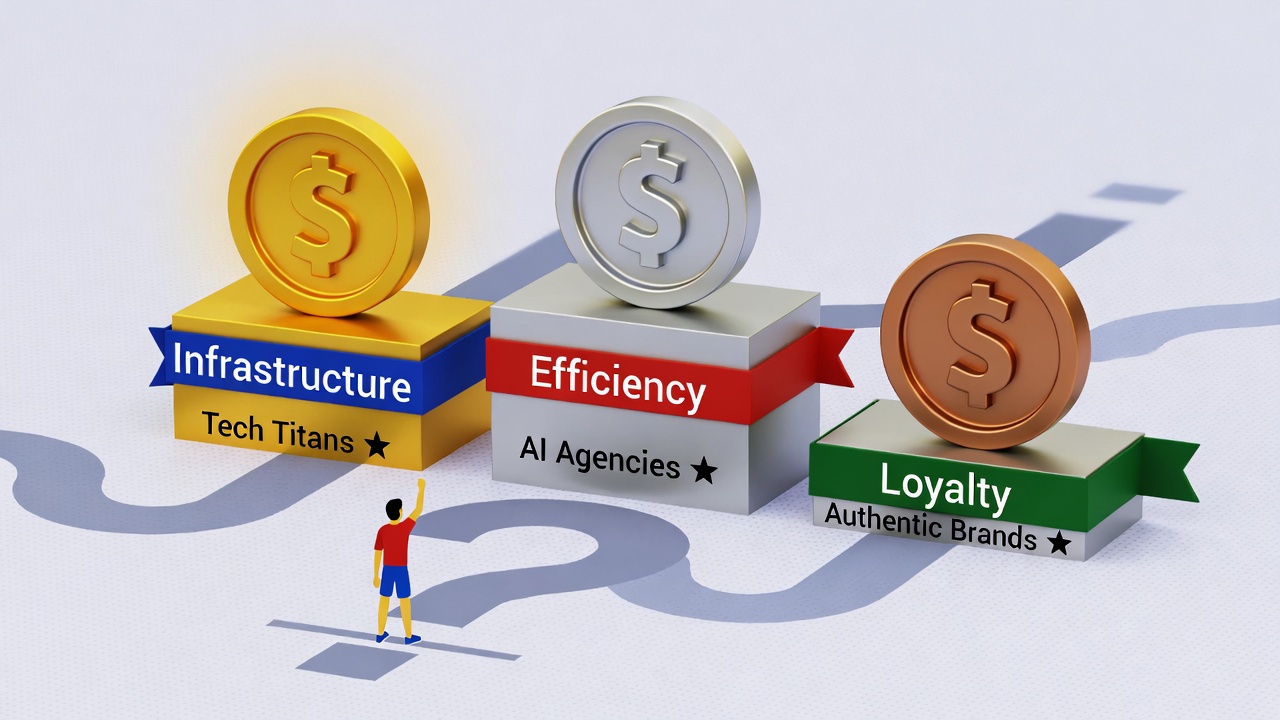
The AI race in digital marketing isn’t a single competition. It’s three parallel races, and your strategy depends on which one you’re running:
The Infrastructure Race
Winners: Google, Meta, Microsoft, Adobe, OpenAI
What they’re competing for: Controlling the platforms and models that everything else is built on.
Your role: Unless you’re building AI infrastructure, you’re a customer here. Pick your platforms strategically and build on foundations you trust.
The Efficiency Race
Winners: Early-adopter agencies, marketing teams that invested in AI orchestration
What they’re competing for: Doing more with less—faster creative cycles, automated workflows, reduced headcount for repetitive tasks.
Your role: This is where most businesses should focus. Identify the workflows that consume time and explore AI solutions. Start small, learn fast, scale what works.
The Customer Loyalty Race
Winners: Authentic brands, creator-led companies, businesses that balance AI efficiency with human connection
What they’re competing for: Trust, emotional connection, brand preference that transcends algorithmic recommendation.
Your role: This is the long game. Use AI to handle the drudgery so humans can handle the soul. Don’t automate the moments that matter.
What This Means for Your Business
If you’re running a small or medium business, here’s the practical takeaway:
Stop Asking "Should We Use AI?"
The question isn’t whether to use AI in your marketing. The question is how—and the answer should be strategic, not reactive.
Start With Efficiency, Not Replacement
The best AI implementations in 2026 aren’t replacing marketing teams. They’re amplifying them. Automate the tasks that drain energy (scheduling, basic analytics, first-draft content). Preserve human involvement for strategy, creativity, and connection.
Invest in Your Authentic Voice
As AI-generated content becomes ubiquitous, your unique perspective becomes more valuable. Your experience. Your stories. Your actual opinions. These are harder to replicate than any blog post.
Build for AI Discovery
Generative Engine Optimization isn’t optional anymore. If your content isn’t structured for AI systems to understand, cite, and recommend, you’re increasingly invisible—even if your traditional SEO looks fine.
The Verdict: Who Actually Wins?
The AI race in digital marketing doesn’t have a single finish line. It has three types of victors:
- The Tech Titans win the Infrastructure Race by controlling the platforms everyone else builds on.
- The Early Adopters win the Efficiency Race by cutting creative cycles, automating workflows, and doing more with less.
- The Authentic Storytellers win the Customer Loyalty Race by using AI to handle the mundane while humans handle the meaningful.
Which race are you running?
How AI Marketing Technology Helps You Compete ?
At AI Marketing Technology, we help businesses compete in all three arenas:
Platform Integration: We build on the winning platforms—Google, Meta, Microsoft—so your marketing leverages the infrastructure that powers modern discovery.
Agentic Automation: Our AI-powered tools handle workflows that used to require dedicated staff—from review management to social scheduling to local SEO optimization.
Human-Centered Design: We believe AI should amplify your authenticity, not replace it. Every solution we build preserves space for the human elements that drive genuine loyalty.
The race is underway. The question is whether you’re competing—or watching from the sidelines.
How AI Marketing Technology Helps You Compete ?
At AI Marketing Technology, we help businesses compete in all three arenas:
Platform Integration: We build on the winning platforms—Google, Meta, Microsoft—so your marketing leverages the infrastructure that powers modern discovery.
Agentic Automation: Our AI-powered tools handle workflows that used to require dedicated staff—from review management to social scheduling to local SEO optimization.
Human-Centered Design: We believe AI should amplify your authenticity, not replace it. Every solution we build preserves space for the human elements that drive genuine loyalty.
The race is underway. The question is whether you’re competing—or watching from the sidelines.
Frequently Asked Questions
Who is winning the AI race in digital marketing in 2026? Three groups are winning different races: Tech giants (Google, Meta, Microsoft) control the infrastructure; early-adopter agencies win on efficiency; and authentic, human-centered brands win customer loyalty. Success depends on which race matters for your business.
What is agentic AI in marketing? Agentic AI refers to autonomous systems that take actions—not just generate content. An agentic AI can research leads, personalize outreach, handle responses, and book meetings with minimal human intervention. It’s a shift from AI as a tool to AI as a worker.
How can small businesses compete with AI-powered marketing giants? Small businesses can compete by focusing on authenticity (something AI struggles to replicate), implementing AI efficiency tools to reduce manual work, and optimizing content for AI discovery through GEO. The tools that power enterprise marketing are increasingly accessible to smaller players.
Is human-created content still valuable when AI can write everything? More valuable than ever. As AI-generated content floods the internet, authentic human perspectives, real experiences, and genuine opinions become differentiators. Consumers are learning to recognize and prefer content with real human insight.
What is Generative Engine Optimization (GEO)? GEO is the practice of creating content that AI systems—like ChatGPT, Google AI Overviews, and Bing Copilot—can understand, trust, and cite when generating answers. It complements traditional SEO by optimizing for AI recommendations, not just search rankings.
Should my business invest in AI marketing tools now or wait? Invest now, but strategically. The businesses building AI capabilities today will have significant advantages as these systems mature. Start with efficiency tools (automation, scheduling, analytics), learn from implementation, and expand based on results. Waiting means falling behind.
Ready to compete in the AI-powered marketing landscape? Contact AI Marketing Technology to discuss how our solutions help businesses of all sizes thrive in the new reality.
