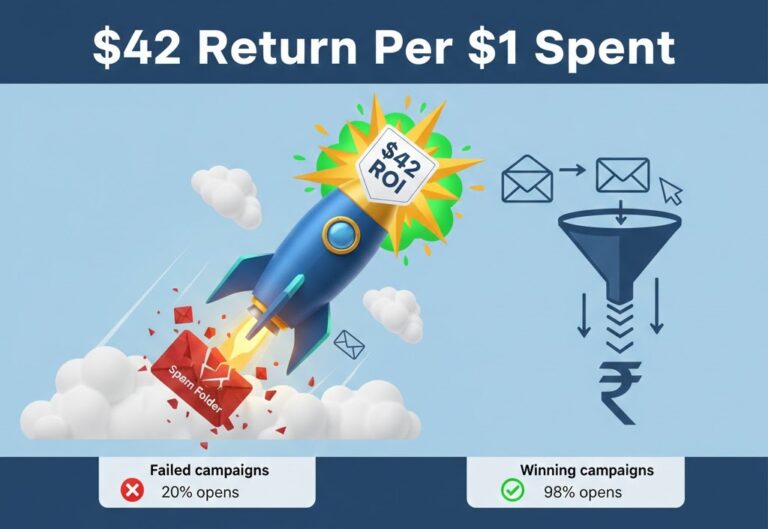
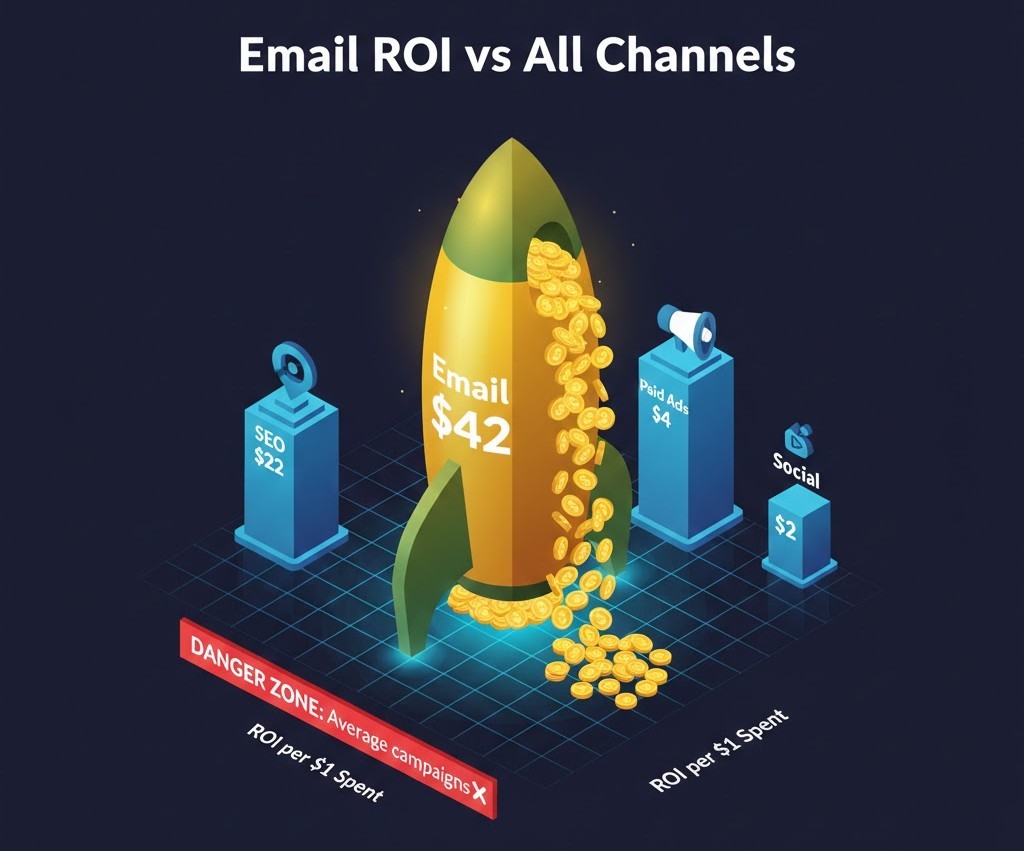
Here’s something that might surprise you in the age of TikTok and AI chatbots: email marketing generates an average return of $42 for every $1 spent.
That’s not a typo. Forty-two to one.
No other marketing channel comes close to that ROI. Not social media. Not paid ads. Not content marketing. Email remains—quietly, persistently—one of the most powerful tools in the marketing arsenal.
But here’s the catch: most email campaigns fail.
They get ignored. Deleted. Marked as spam. The inbox is a battlefield, and most businesses are bringing a butter knife.
What separates campaigns that convert from campaigns that get trashed? Strategy, execution, and an understanding of what actually moves people to act.
What Makes an Email Campaign Successful ?
Let’s define success clearly before diving into tactics.
A successful email campaign is a strategic, data-driven message that achieves a specific business goal—whether that’s increasing engagement, generating leads, driving sales, or nurturing relationships.
It’s not about sending emails. Anyone can do that. It’s about sending the right email, to the right person, at the right time—and getting them to take action.
Why Email Campaign Success Matters ?
The numbers tell the story:
Metric | Average Business Result |
ROI | $42 for every $1 spent |
Average open rate | 21-25% |
Average click rate | 2.5-3% |
Mobile opens | 65%+ of all emails |
Email provides direct access to your audience’s inbox—a space they’ve explicitly allowed you into. That’s incredibly valuable. But waste that access with bad campaigns, and you’ll lose it fast.
The Core Elements of Successful Email Campaigns
Before you write a single word of copy, get these fundamentals right.
1. Clear Campaign Goals
Every email needs a purpose. Not a vague hope—a specific, measurable objective.
Examples of clear goals:
- Nurture new leads through a welcome sequence
- Re-engage subscribers who haven’t opened in 90 days
- Drive registrations for an upcoming webinar
- Promote a limited-time offer
- Educate customers about a new feature
Without a clear goal, you can’t measure success. And without measurement, you can’t improve.
2. Audience Segmentation
One-size-fits-all emails rarely perform well.
Your subscribers aren’t identical. They have different needs, different pain points, different stages in their journey with you. Treating them all the same means your messages feel generic to everyone.
Segment your list by:
- Demographics: Industry, company size, role
- Behavior: Purchase history, engagement level, pages visited
- Lifecycle stage: New subscriber, active customer, at-risk of churning
- Interests: Product categories, content topics they’ve engaged with
- Geography: Time zone, location-specific offers
Targeted emails consistently outperform broad blasts across every metric that matters.
3. Compelling Subject Lines
Your subject line determines whether your email gets opened or ignored. Everything else is irrelevant if this fails.
Subject line best practices:
- Keep it short and clear. Mobile devices truncate long subjects.
- Create curiosity. But don’t mislead—clickbait destroys trust.
- Use personalization. Including the recipient’s name can boost opens by 26%.
- Convey value or urgency. Why should they open this right now?
- Test relentlessly. Small changes can have big impacts.
Examples that work:
- “Quick question about your project”
- “The #1 mistake killing your conversion rate”
- “[Name], your free guide is ready”
- “Only 24 hours left to claim your spot”
Crafting High-Performing Email Content
Once they open, you have seconds to earn their attention.
Personalized Messaging
Personalization goes far beyond “Hi [First Name].”
Advanced personalization tactics:
- Dynamic content based on past behavior (recommended products, relevant case studies)
- Tailored messaging based on lifecycle stage (new vs. long-term customer)
- Content that references their specific actions (“You viewed this product last week…”)
- Location-specific offers and information
Personalized emails make recipients feel understood. Generic blasts feel like spam.
Strong Call-to-Action
Every email should guide the reader toward one specific action.
What makes a CTA work:
- Clear and action-oriented. “Download Your Guide” beats “Click Here”
- Visually prominent. Make it impossible to miss
- Aligned with the campaign goal. Don’t confuse multiple CTAs
- Creates urgency when appropriate. Deadlines drive action
One primary CTA per email. Multiple CTAs dilute focus and reduce conversions.
Mobile-Optimized Design
Over 65% of emails are opened on mobile devices. If your emails don’t work on phones, they don’t work.
Mobile optimization essentials:
- Responsive design that adapts to screen size
- Short paragraphs and scannable content
- Large, tappable buttons (minimum 44×44 pixels)
- Fast-loading images (or work without them)
- Preview text that complements the subject line
Test every email on mobile before sending. What looks great on desktop can be unreadable on a phone.
Automation: The Force Multiplier
Manual email campaigns have their place. But automation is where email marketing becomes truly powerful.
Why Automation Works ?
Automated emails are:
- Timely: Triggered by specific actions, delivered at perfect moments
- Relevant: Based on behavior, not guesswork
- Consistent: Run 24/7 without manual effort
- Scalable: Work for 100 subscribers or 100,000
Automated emails consistently outperform batch campaigns because they’re contextually relevant.
Common Automated Campaigns
Welcome sequences New subscribers get introduced to your brand, values, and offerings through a series of strategically timed emails.
Abandoned cart reminders Potential customers who left items in their cart get gentle nudges to complete their purchase.
Post-purchase follow-ups Customers receive onboarding help, usage tips, and opportunities to deepen the relationship.
Re-engagement campaigns Inactive subscribers get targeted messages designed to rekindle interest—or confirm they should be removed.
Timing: When You Send Matters
The same email sent at different times can have dramatically different results.
Factors That Influence Optimal Timing
- Audience time zone. Schedule relative to recipients, not your location
- Industry patterns. B2B often performs better Tuesday-Thursday mornings; B2C varies widely
- Past engagement data. When do YOUR subscribers open and click?
- Content type. Urgent offers might warrant different timing than educational content
Finding Your Optimal Send Time
There’s no universal “best time to send email.” It depends on your specific audience.
Use A/B testing to find what works: 1. Split your list randomly 2. Send the same email at different times 3. Compare open and click rates 4. Apply learnings to future campaigns
Most email platforms provide engagement data by day and hour. Use it.
Measuring Success: Key Metrics
What gets measured gets improved. Track these metrics for every campaign:
Essential Email Metrics
Metric | What It Tells You | Good Benchmark |
Open rate | Subject line effectiveness | 20-25% |
Click-through rate | Content relevance and CTA strength | 2.5-3% |
Conversion rate | Overall campaign effectiveness | Varies by goal |
Bounce rate | List health | Under 2% |
Unsubscribe rate | Content/frequency alignment | Under 0.5% |
Beyond Vanity Metrics
Opens and clicks matter, but they’re not the end goal. Track downstream conversions—actual leads, sales, or actions that drive business results.
Testing and Optimization
Successful email marketers are perpetual experimenters.
What to A/B Test
- Subject lines (biggest impact on open rates)
- Send times and days
- Email length and format
- CTA wording, placement, and design
- Personalization approaches
- Content types (educational vs. promotional)
How to Test Effectively ?
- Test one variable at a time
- Use statistically significant sample sizes
- Document results and learnings
- Apply winners systematically
Every test teaches you something about your audience. Even “failed” tests provide valuable data.
Common Mistakes to Avoid
These errors kill campaign performance:
- Sending too many emails. Frequency fatigue leads to unsubscribes and spam complaints.
- Ignoring list hygiene. Dead addresses hurt deliverability. Clean your list regularly.
- Overloading with information. One message, one goal. Complexity kills conversion.
- Neglecting mobile. If it doesn’t work on phones, it doesn’t work.
- Skipping analytics. Sending without measuring is flying blind.
- Same message to everyone. Segmentation isn’t optional—it’s fundamental.
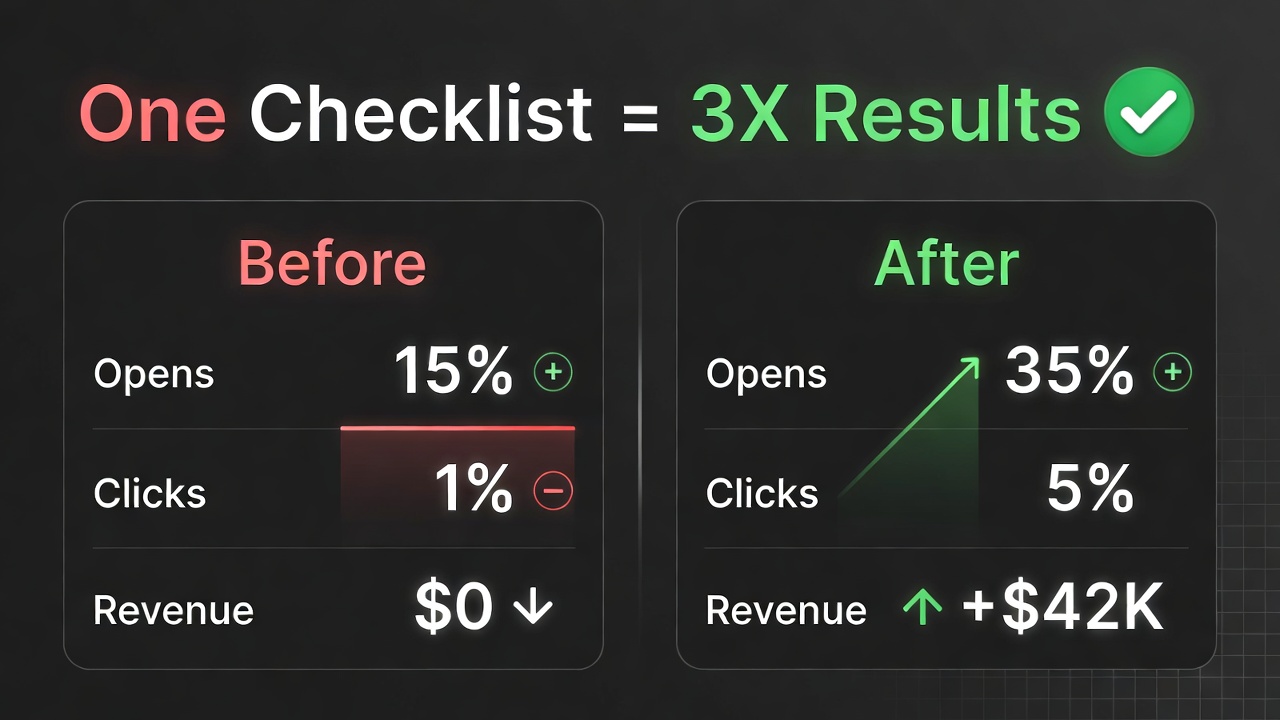
The Email Success Checklist
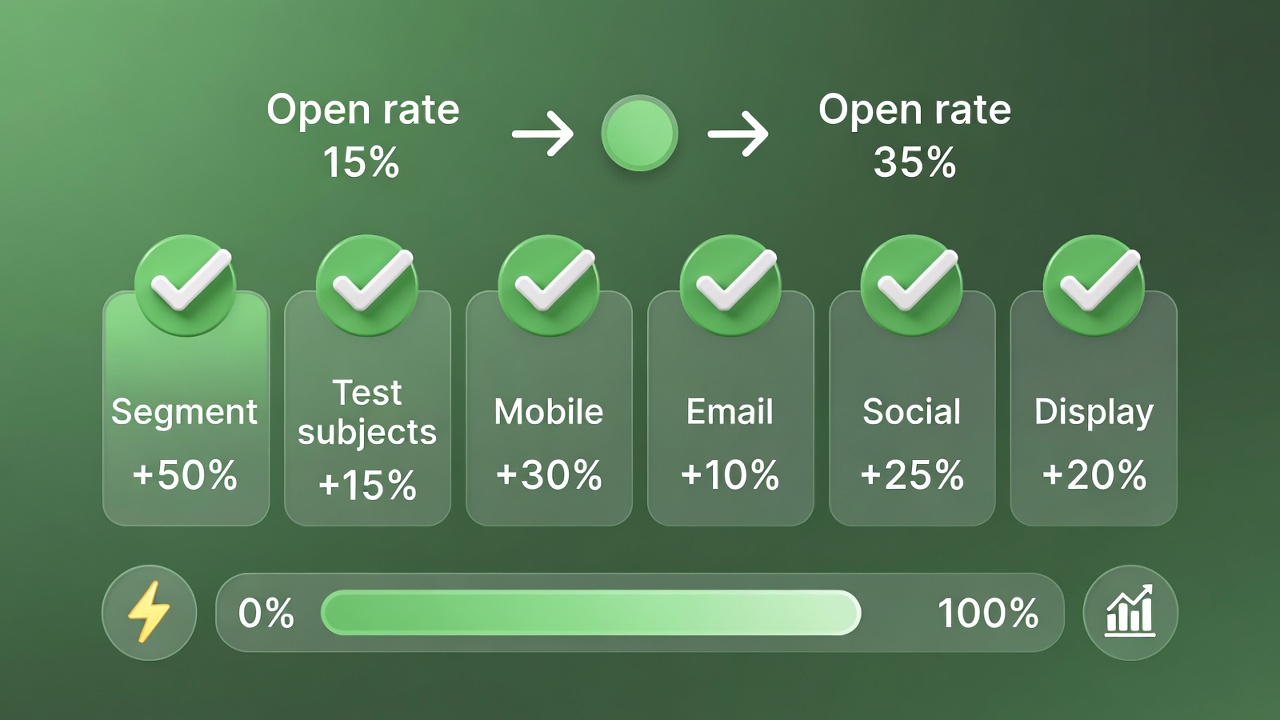
Before every campaign send:
Step | Action | Impact |
1 | Segment by behavior | +50% opens |
2 | Test 3 subject line variations | +15% clicks |
3 | Use mobile-first design | +30% engagement |
4 | Send at optimal time (test-derived) | Peak performance |
5 | Check CTA clarity | Improved conversion |
6 | Review personalization | Better relevance |
Frequently Asked Questions
What makes an email campaign successful? A successful campaign delivers relevant, personalized content aligned with clear goals, drives recipients to take action, and achieves measurable business results. It’s about the right message to the right audience at the right time.
How often should I send email campaigns? Frequency depends on your audience and content quality. Consistency matters more than volume. Most businesses find weekly or bi-weekly works well—but let engagement data guide you.
Are automated email campaigns effective? Yes—often more effective than manual campaigns. Automated emails are triggered by specific behaviors, making them highly relevant and timely. They also scale without additional effort.
What is the most important element of an email campaign? Relevance. Emails that resonate with the recipient’s needs and interests outperform everything else. This is why segmentation and personalization are so critical.
How can I improve my email open rates? Focus on subject lines, sender reputation, timing, and list quality. Personalized subject lines, testing different approaches, and maintaining a clean list all contribute to higher opens.
What’s a good email open rate? Industry average is 21-25%. Above 25% is strong; above 30% is excellent. But focus on improving YOUR rates over time rather than comparing to generic benchmarks.
Ready to transform your email marketing into a conversion engine? AI Marketing Technology helps businesses design, automate, and optimize email campaigns that deliver results.
