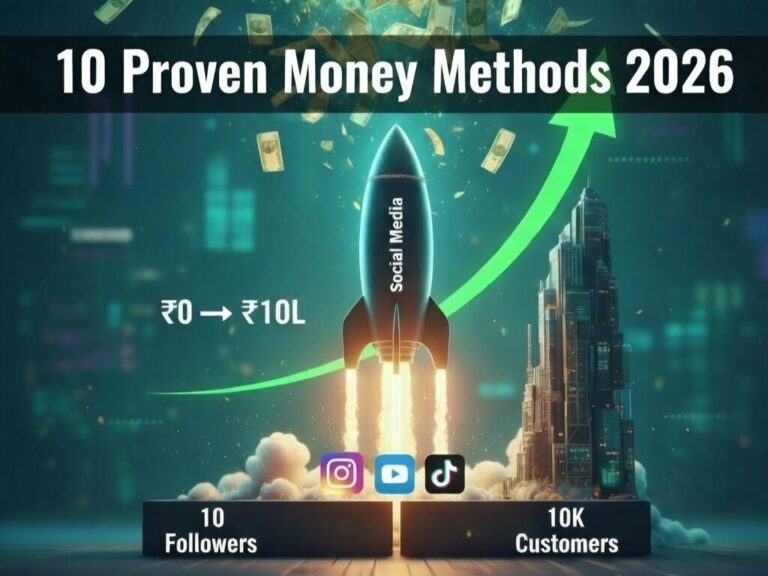
Let’s get something out of the way: you can absolutely make real money from social media.
Not in a “buy my course and become a millionaire” kind of way. In a practical, sustainable, “this-actually-pays-my-bills” kind of way.
The creator economy isn’t a fantasy. It’s a $250+ billion global industry, and it’s growing every year. People are building careers—real careers—on platforms that didn’t exist a decade ago.
But here’s what the hype merchants won’t tell you: most of the flashy advice is garbage.
Viral overnight success stories are survivorship bias in action. For every 19-year-old making millions from TikTok, there are thousands quietly building sustainable income through methods that actually work.
This guide covers those methods. The ones that work for creators, businesses, and professionals who want to turn social media presence into real revenue.
Why Is Social Media a Legitimate Income Opportunity ?
Before diving into specific methods, let’s understand why this works at all.
Social media platforms have something incredibly valuable: attention at scale.
- Instagram: 2+ billion monthly active users
- YouTube: 2.5+ billion monthly users
- TikTok: 1.5+ billion monthly users
- LinkedIn: 1+ billion professionals
Where attention gathers, money follows. Brands want access to those eyeballs. Consumers want guidance from people they trust. Platforms want to keep creators creating.
These dynamics create multiple paths to monetization—whether you’re an individual creator or a business.
1. Influencer Marketing & Brand Collaborations
What It Is
Brands pay you to promote their products or services to your audience. This could be a sponsored Instagram post, a TikTok video featuring their product, or a dedicated YouTube review.
How the Money Works ?
Compensation varies wildly based on audience size, engagement rates, and niche:
Audience Size | Typical Earnings Per Post |
Micro (5K-25K) | ₹5,000 – ₹25,000 |
Mid (25K-100K) | ₹25,000 – ₹1,00,000 |
Macro (100K-500K) | ₹1,00,000 – ₹5,00,000 |
Major (500K+) | ₹5,00,000+ |
Making It Work
- Niche audiences often command higher rates than general ones
- Engagement rate matters more than follower count
- Authenticity is everything—audiences spot fake endorsements instantly
- Long-term partnerships typically pay better than one-off posts
Best platforms: Instagram, TikTok, YouTube
2. Affiliate Marketing
What It Is
You promote products using unique tracking links. When someone purchases through your link, you earn a commission—typically 5-30% of the sale.
Why It Works on Social Media ?
- No need to create products
- Income potential scales with audience
- Works across platforms (link in bio, Stories, video descriptions)
- Can be genuinely helpful when you recommend products you believe in
Getting Started
- Join affiliate programs in your niche (Amazon Associates, ShareASale, individual brand programs)
- Create content that naturally incorporates products
- Disclose affiliate relationships transparently
- Track what converts and double down
Best platforms: YouTube, Instagram, Pinterest, blogs connected to social profiles
3. Selling Your Own Products
Physical and Digital
Social media is an incredibly effective sales channel for your own products:
- Physical products: Merchandise, handmade items, branded goods
- Digital products: eBooks, templates, presets, guides, printables
The Advantage
When you sell your own products, you control:
- Pricing and profit margins
- Branding and presentation
- Customer relationships
- Product development based on audience feedback
Making It Work
- Use platform shopping features (Instagram Shop, Facebook Marketplace)
- Create content that demonstrates product value
- Build anticipation before launches
- Leverage user-generated content from happy customers
Best platforms: Instagram, Facebook, Pinterest, TikTok Shop
4. Offering Services
Turning Expertise Into Income
Social media is a powerful showcase for service-based businesses:
- Social media management for other businesses
- Graphic design and creative services
- Writing and copywriting
- Consulting and coaching
- Photography and videography
Why This Works
Your content becomes your portfolio. Every post demonstrates your skills. Potential clients can evaluate your work before ever reaching out.
Building a Service Business on Social
- Share your process, not just results
- Post case studies and client success stories
- Make it easy to inquire (clear CTAs, booking links)
- Position yourself as an expert through valuable content
Best platforms: Instagram, LinkedIn, Twitter/X
5. YouTube Ad Revenue
The Platform's Built-In Monetization
Once you meet YouTube’s requirements, you earn money from ads displayed on your videos. This is truly passive—create once, earn repeatedly.
Requirements
- 1,000 subscribers
- 4,000 watch hours in the past 12 months (or 10 million Shorts views)
What Affects Earnings
- Niche matters: Finance and business content pays significantly more than entertainment
- Audience location: Viewers from high-GDP countries generate more ad revenue
- Watch time: Longer videos can accommodate more ad placements
- Engagement: Higher engagement signals quality to the algorithm
Realistic Expectations
YouTube ad revenue typically ranges from $2-10 per 1,000 views, depending on niche and audience. Some channels in premium niches see $20+ per 1,000 views.
6. Paid Subscriptions & Memberships
Recurring Revenue From Your Most Loyal Fans
Platforms now offer built-in subscription options where followers pay monthly for exclusive access:
- Instagram Subscriptions
- YouTube Channel Memberships
- Patreon (integrated with all platforms)
What Subscribers Pay For ?
- Exclusive content not available to general followers
- Behind-the-scenes access
- Early access to new content
- Direct interaction (Q&As, community posts)
- Bonus materials and resources
Why Memberships Are Powerful ?
Recurring revenue is more stable than one-off payments. Even 100 subscribers at ₹500/month equals ₹50,000 in predictable monthly income.
7. Selling Courses & Workshops
Monetizing Your Knowledge
If you have expertise people want to learn, courses offer high-margin income:
- Pre-recorded video courses (create once, sell forever)
- Live workshops and cohort-based programs
- One-on-one coaching packages
What Sells ?
- Skills people can monetize (marketing, design, business)
- Personal development (productivity, mindset, habits)
- Hobby-related skills (photography, cooking, fitness)
- Professional development in your industry
The Social Media Connection
Social content serves as your marketing engine. Free content demonstrates expertise and builds trust. Paid courses go deeper for those who want more.
Best platforms: YouTube, Instagram, LinkedIn (for promotion), dedicated course platforms for delivery
8. Live Streaming & Virtual Gifts
Real-Time Monetization
During live broadcasts, viewers can send virtual gifts that convert to real money:
- TikTok Live: Gifts convert to “diamonds” which equal cash
- YouTube Super Chat: Paid messages during streams
- Instagram Live Badges: Viewers purchase badges to support
Best Use Cases
- Q&A sessions with engaged communities
- Entertainment and performance content
- Educational demonstrations
- Special events and announcements
Making Live Work
Consistency matters. Regular live sessions build habits for your audience. Interacting with gift-senders encourages more participation.
9. Licensing Your Content
Getting Paid for Content You've Already Created
Brands, media companies, and agencies often pay to license viral or high-quality content:
- News outlets licensing footage of events
- Brands licensing user-generated content for campaigns
- Media companies licensing clips for compilations
How It Works ?
- Platforms and agencies reach out for popular content
- You can proactively offer licensing through platforms like Storyful or Jukin Media
- Rates vary based on usage rights and content value
What Gets Licensed ?
- Viral moments and unique footage
- High-quality photos and videos
- Content featuring products (for brand use)
- Newsworthy captures
10. Driving Traffic to Monetized Websites
Social as a Traffic Engine
Instead of monetizing directly on platforms, use social media to drive traffic to websites you control:
- Blogs with display advertising
- Landing pages with lead magnets
- E-commerce stores
- Affiliate content sites
Why This Strategy Works ?
You own the destination. Platform algorithm changes can’t cut off your revenue. You have more monetization options on your own property.
Execution
- Create social content that generates interest
- Include clear calls-to-action directing to your website
- Ensure landing pages convert visitors to subscribers or customers
- Diversify traffic sources across platforms
Best platforms: Pinterest (incredible for website traffic), Facebook, LinkedIn
Making It Work: Success Principles
Regardless of which methods you pursue, certain principles apply:
Consistency Beats Virality
Regular, reliable posting builds sustainable audiences. Viral moments are nice bonuses, not strategies.
Know Your Audience
The better you understand what your audience wants, the better you can serve them—and monetize that relationship.
Value First, Always
The creators who last are the ones who genuinely help their audiences. Monetization follows value creation, not the reverse.
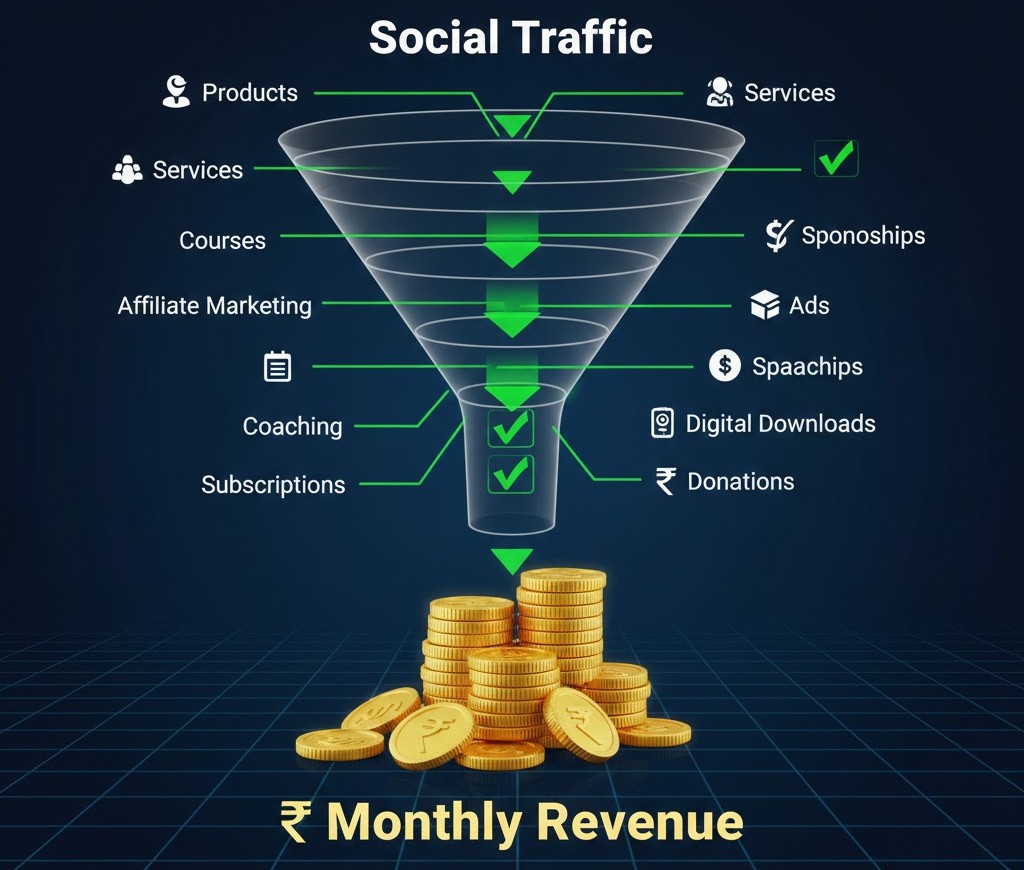
Diversify Income Streams
Don’t rely on a single method. The most resilient creator businesses layer multiple revenue sources.
Quick Comparison
Method | Pros | Cons |
Brand deals | High per-post value | Requires audience size |
Affiliate | Passive income potential | Needs traffic volume |
Own products | High margins, full control | Upfront creation work |
Services | High value per client | Time-limited scalability |
YouTube ads | True passive income | Slow to build |
Memberships | Predictable recurring revenue | Ongoing content expectations |
Frequently Asked Questions
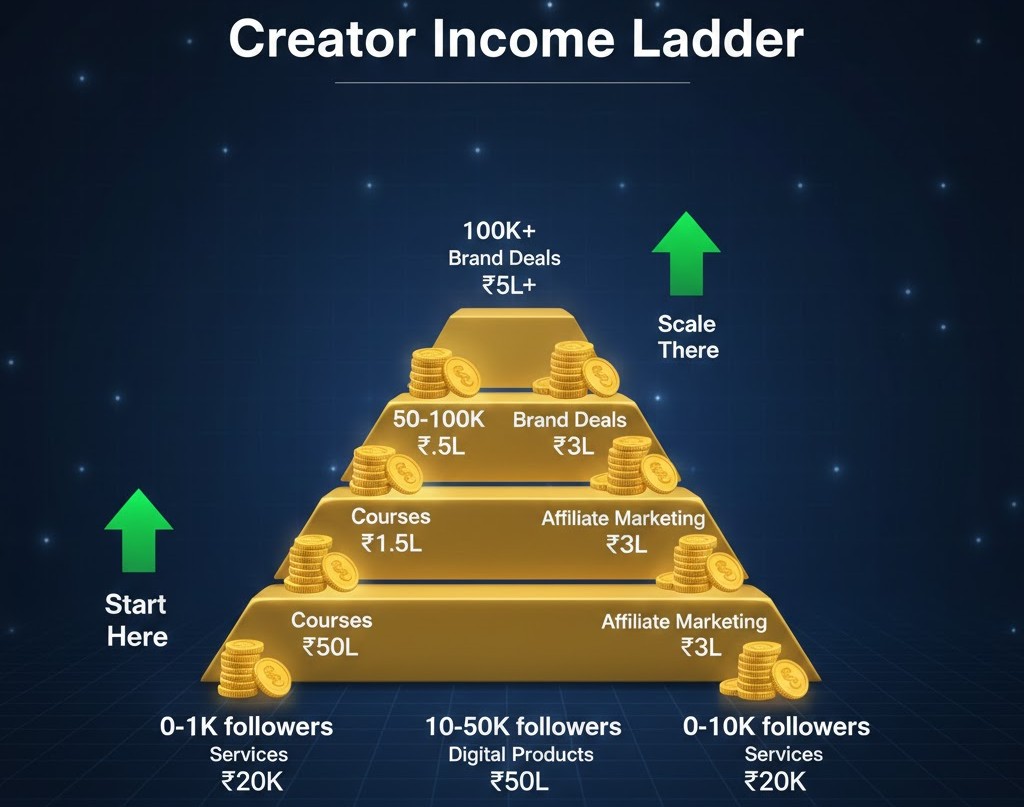
Can you make money on social media without a huge following? Yes. Services, affiliate marketing, and licensing can work with smaller audiences. What matters more is audience quality and engagement, not raw follower count.
How long does it take to start earning from social media? Realistic timeline: 3-12 months of consistent effort before meaningful income. Some methods (services, affiliate) can generate faster returns than others (ad revenue, brand deals).
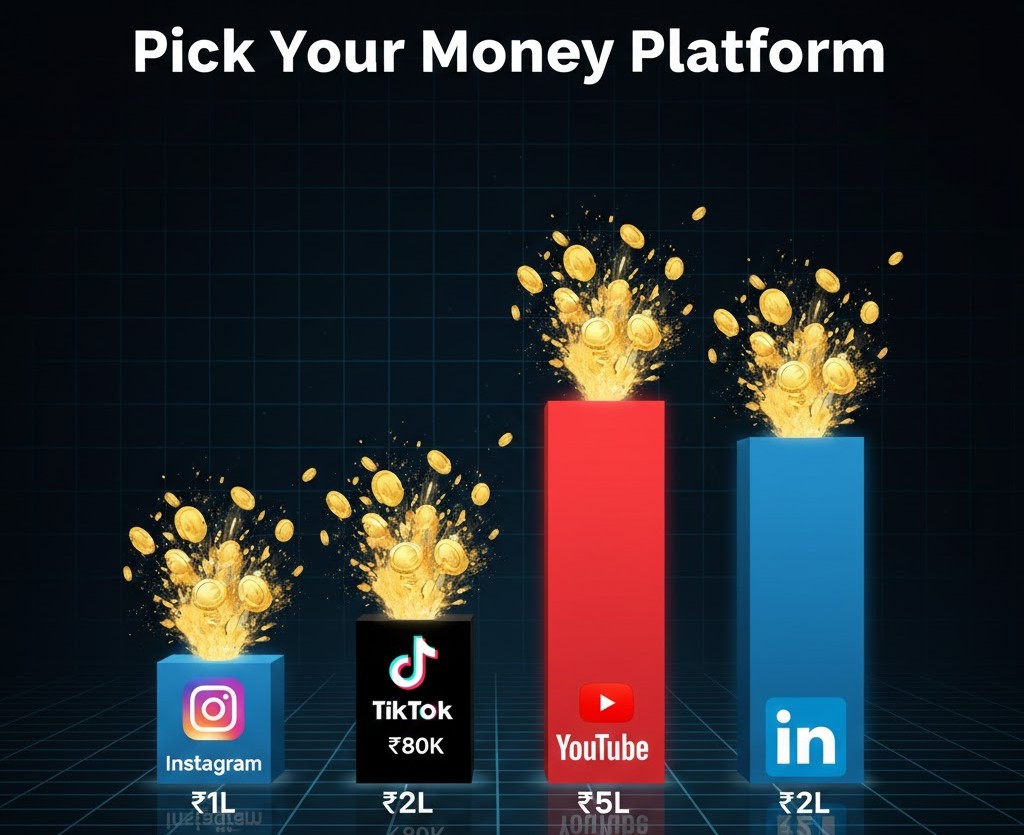
Which social media platform pays the most? YouTube typically offers the highest long-term passive earning potential through ad revenue. But Instagram, TikTok, and LinkedIn can be equally or more profitable depending on your niche and monetization strategy.
Do I need to invest money to start? No. Most methods require time, skills, and consistency rather than upfront financial investment. As you grow, investing in equipment or tools can accelerate progress.
Can businesses use these strategies too? Absolutely. Many of these methods—especially services, product sales, and traffic generation—are core strategies for business social media presence.
What’s the biggest mistake people make? Chasing follower count instead of building genuine audience relationships. A smaller engaged audience monetizes better than a large disengaged one.
Ready to turn your social presence into a revenue stream? AI Marketing Technology helps creators and businesses build social strategies that convert.
