
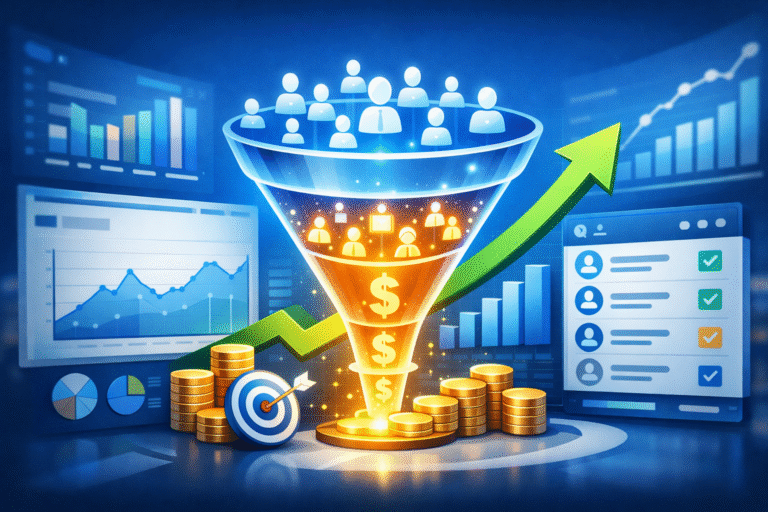
Here’s a truth that most businesses learn the hard way: traffic is vanity, leads are sanity.
You can have a million website visitors and still struggle to make payroll. Or you can have a thousand qualified leads and build a thriving business.
The difference isn’t just semantic. It’s fundamental to how sustainable businesses actually grow.
Yet leads are consistently undervalued. They don’t get the attention that flashy traffic numbers or final sales figures receive. They sit in the middle, unglamorous but absolutely essential.
Leads are the bridge between visibility and and revenue. And if you’re not treating them that way, you’re leaving money on the table.
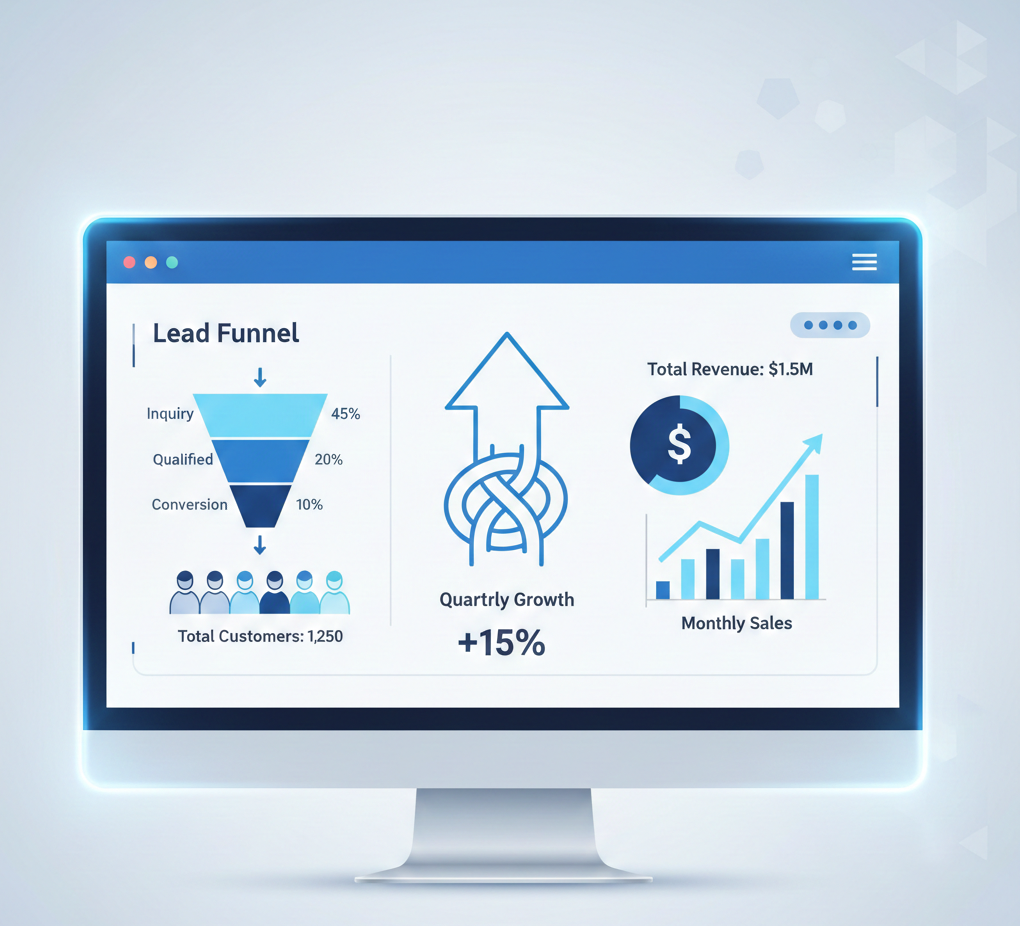
What Exactly Is a Lead?
Let’s get precise, because the term gets thrown around loosely.
A lead is a person or business that has shown interest in what you offer by taking a measurable action.
Not someone who accidentally landed on your website. Not someone who scrolled past your social media posts. A lead has actively signaled that they want to know more.
Common Examples of Lead Actions
- Filling out a contact form
- Downloading a guide, ebook, or resource
- Subscribing to your email newsletter
- Requesting a demo or consultation
- Starting a free trial
- Adding items to a cart (even without purchasing)
The key word here is intent. A lead isn’t just curious, they’ve taken a concrete step that says, “I’m interested. Tell me more.”
Why Leads Matter More Than Traffic
High traffic numbers look impressive in reports. They feel good. They suggest that something is working.
But traffic alone doesn’t pay bills.
The Real Difference
| Traffic | Leads |
| Attention | Opportunity |
| Passive interest | Active intent |
| Anonymous visitors | Identifiable prospects |
| Vanity metric | Revenue predictor |
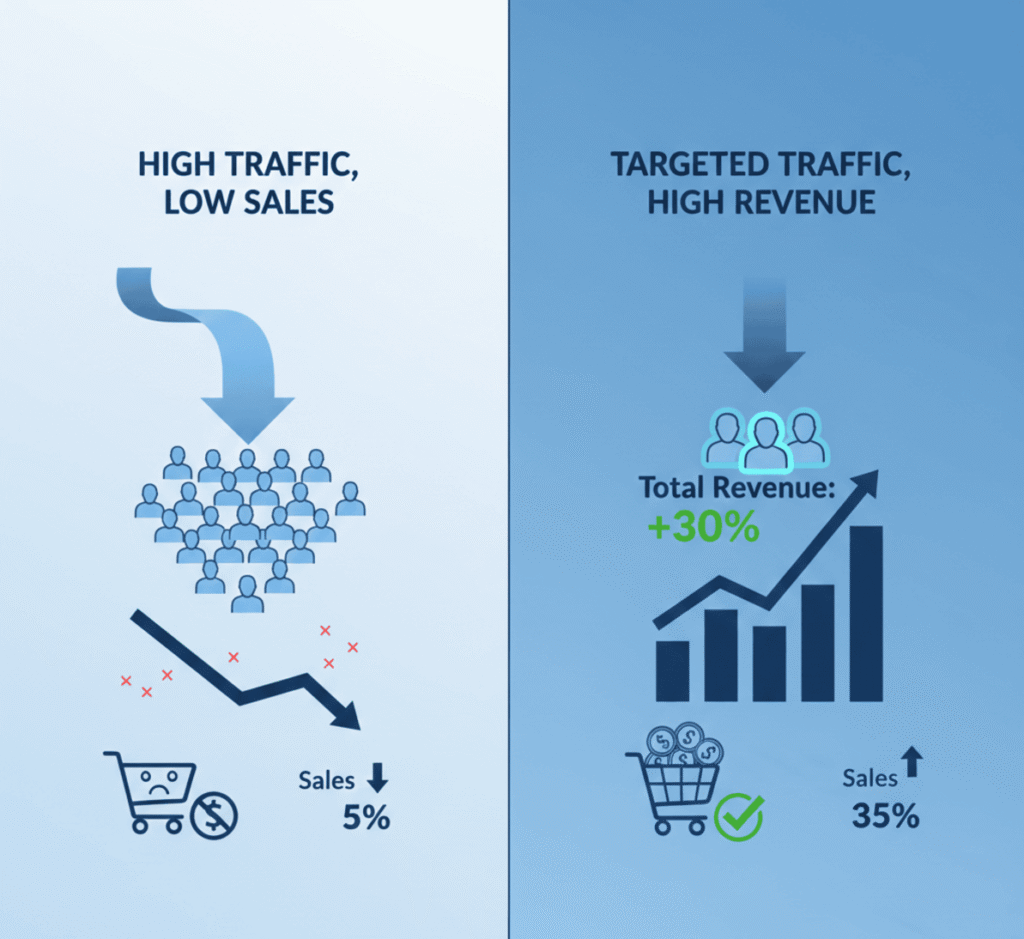
Here’s the reality: a website with 1,000 qualified leads is almost always more valuable than one with 100,000 random visitors.
Why? Because those 1,000 people have raised their hands. They’ve said, “I have a problem. I think you might be able to solve it.” That’s infinitely more valuable than anonymous eyeballs.
The True Power of Leads
When you have a consistent flow of qualified leads, something magical happens: your business becomes predictable.
Predictable Revenue
Without leads, sales feel like gambling. Sometimes you get lucky. Sometimes you don’t. There’s no pattern, no control.
With a steady lead pipeline, you can forecast. You know that X leads typically convert to Y customers at Z revenue. You can plan. You can invest. You can grow strategically instead of reactively.
Better Conversion Rates
People who become leads are already interested. They’ve opted in. They’ve shown intent.
Compare that to cold outreach, where you’re interrupting strangers who have no idea who you are. Which conversation is easier? Which one converts better?
Leads convert at dramatically higher rates because the interest is already there. Your job shifts from convincing strangers to nurturing relationships.
Stronger Customer Relationships
Here’s what most people miss: the lead stage is where relationships begin.
When someone downloads your guide or signs up for your newsletter, that’s the start of a conversation. How you treat them during this stage, the content you send, the value you provide, how quickly you respond—shapes their perception of your entire business.
Great lead nurturing creates customers who trust you before they ever buy.
Not All Leads Are Created Equal
This is where many businesses go wrong. They celebrate lead quantity while ignoring lead quality.
A hundred unqualified leads will waste your sales team’s time and drain your resources. Ten highly qualified leads might generate more revenue with less effort.
Qualified vs. Unqualified Leads
| Qualified Leads | Unqualified Leads |
| Match your target audience | Poor fit for your offering |
| Have a real need or problem | No clear pain point |
| Can afford your solution | Budget doesn’t align |
| Ready or close to making a decision | Just browsing, no timeline |
| Engaged with multiple touchpoints | One accidental click |
The goal isn’t more leads. It’s better- leads.
This is why lead qualification matters so much. Every lead that enters your pipeline should be evaluated: Are they the right fit? Do they have genuine potential to become a customer?
How Leads Power Long-Term Marketing Success
Here’s a perspective shift that changes everything: leads turn marketing from an expense into an asset.
When marketing only produces awareness, it’s a cost. Money goes out, attention comes in, but the connection to revenue is fuzzy.
When marketing produces qualified leads, it becomes measurable. Tangible. Directly tied to business outcomes.
Lead Nurturing: The Compound Effect
Most leads won’t convert immediately. They’re interested, but the timing isn’t right. They need more information. They’re comparing options.
This is where lead nurturing creates enormous value.
Why Lead Nurturing Matters:
- Builds credibility through consistent, valuable content
- Educates prospects so they can make informed decisions
- Keeps your brand top of mind when they’re ready to buy
- Creates trust before the sales conversation even begins
A lead you nurture today might become a customer in three months. Without nurturing, that same lead forgets about you by next week.
Email campaigns, valuable content, personalized follow-ups—these aren’t just nice touches. They’re the difference between leads that convert and leads that disappear.
Digital Channels That Generate Strong Leads
Not all marketing channels are equal when it comes to lead quality.
Content Marketing
Blogs, guides, and educational resources attract high-intent users. Someone who reads your comprehensive guide on solving a specific problem is demonstrating genuine interest.
SEO and GEO
Search-driven leads are often the most qualified because they come with built-in intent. Someone searching “best accounting software for freelancers” knows what they need. They’re actively looking for a solution.
Landing Pages and Lead Magnets
The formula: clear value + strong call-to-action = higher conversion rates.
A well-designed landing page with a compelling offer (ebook, template, free consultation) converts visitors into leads at much higher rates than generic website pages.
Paid Media (Used Strategically)
Paid ads work best when they’re connected to optimized landing pages and lead nurturing systems. Ads without a lead strategy waste money. Ads with a lead strategy accelerate growth.
Why Businesses Fail Without a Lead Strategy
Many businesses focus obsessively on either visibility (top of funnel) or sales (bottom of funnel) while completely neglecting the middle.
This creates a leaky bucket. Attention comes in, but it has nowhere to go.
Common Lead Strategy Mistakes
- Chasing traffic instead of conversions. More visitors means nothing if they don’t become leads.
- Ignoring lead follow-up. Leads go cold fast. Speed matters enormously.
- Not qualifying leads properly. Sales teams waste time on prospects who were never going to buy.
- Relying on a single lead source. When that channel changes (and it will), everything breaks.
Without a lead system, growth becomes unstable. You’re dependent on luck, timing, and hoping that awareness somehow translates to revenue.
Turning Leads Into Revenue
Leads are potential energy. Process is what converts them into kinetic energy, actual customers, actual revenue.
What Converts Leads Into Customers
Speed Studies consistently show that responding to leads within 5 minutes dramatically increases conversion rates. Wait an hour, and you’ve already lost a significant percentage.
Relevance Generic follow-ups feel generic. Personalized messaging, acknowledging what they downloaded, what pages they visited, what questions they might have, builds trust.
Consistency One touchpoint isn’t enough. Multiple relevant contacts over time build the confidence leads need to become customers.
The Future of Lead Generation
Lead generation isn’t going away. If anything, it’s becoming more sophisticated.

AI, Automation, and Smarter Targeting
Modern lead strategies increasingly leverage:
- AI-driven insights that identify patterns in lead behavior
- Personalized experiences that adapt to individual needs
- Predictive scoring that focuses effort on highest-potential leads
- Automated nurturing that delivers the right content at the right time
The tools are getting smarter. But the fundamental truth remains: leads fuel growth. Always have. Always will.
Frequently Asked Questions
What is a lead in marketing? A lead is a person or company that has shown interest in your product or service by taking a specific action, like filling out a form, downloading content, or requesting information.
Why are leads more important than traffic? Traffic shows visibility, but leads show intent. Leads are much more likely to become customers because they’ve already demonstrated interest in what you offer.
What makes a lead “qualified”? A qualified lead fits your target audience, has a clear need for your solution, has the budget to purchase, and shows genuine buying intent. Not all leads are qualified, that’s why evaluation matters.
How long does it take to convert a lead? It varies enormously depending on your industry, price point, and buyer journey. Some leads convert in days; others take months of nurturing. The key is having systems for both.
Can small businesses benefit from lead generation? Absolutely. Lead generation might be more important for small businesses, where every customer matters more. A consistent lead strategy helps small businesses grow predictably and efficiently.
What’s the biggest mistake businesses make with leads? Slow follow-up. Leads go cold incredibly fast. The businesses that respond quickly, within minutes, not hours, consistently outperform those that wait.
Ready to build a lead strategy that drives predictable growth? AiMt helps businesses capture, qualify, and convert leads at scale.
