You’ve heard it before. Someone sees what you make—maybe it’s handcrafted jewelry, vintage finds, digital guides, or specialty baked goods—and they say it: “You should totally sell this online!”
You nod. You agree. You might even feel a little flutter of excitement.
And then… nothing.
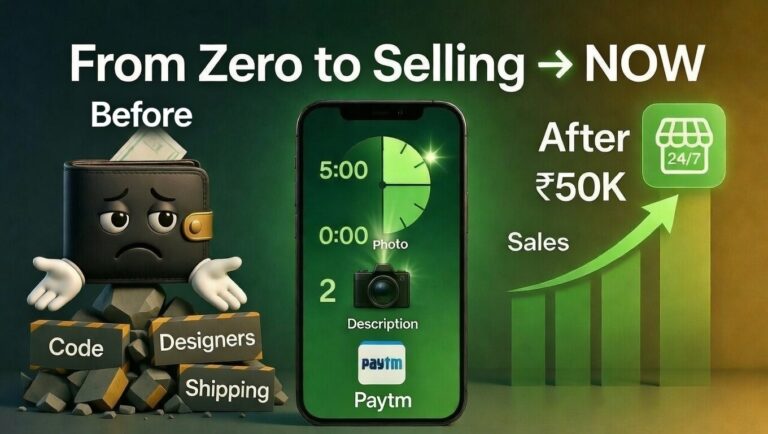
Because in your head, “selling online” means building a website, dealing with payment processors, figuring out shipping, setting up proper photography, and basically running a whole operation before you can even sell a single item.
Here’s the reality check you need: that version of e-commerce hasn’t existed for years.
The gap between “having something to sell” and “having a place to sell it” has shrunk to almost nothing. We’re talking minutes, not months.
The Tech Barrier Doesn't Exist Anymore
Whatever you’re imagining as the obstacle—complicated code, expensive web designers, weeks of setup—doesn’t exist anymore.
If you can:
- Post a photo to Instagram
- Send an email
- Use a smartphone
Then you have every technical skill required to start selling online.
The platforms have done the heavy lifting. They’ve reduced the setup process to essentially three steps:
- Take a photo. Your smartphone is fine. Natural light is your friend.
- Write a description. Tell people what it is and why it’s worth buying.
- Set a price and connect payment. Link a bank account or PayPal.
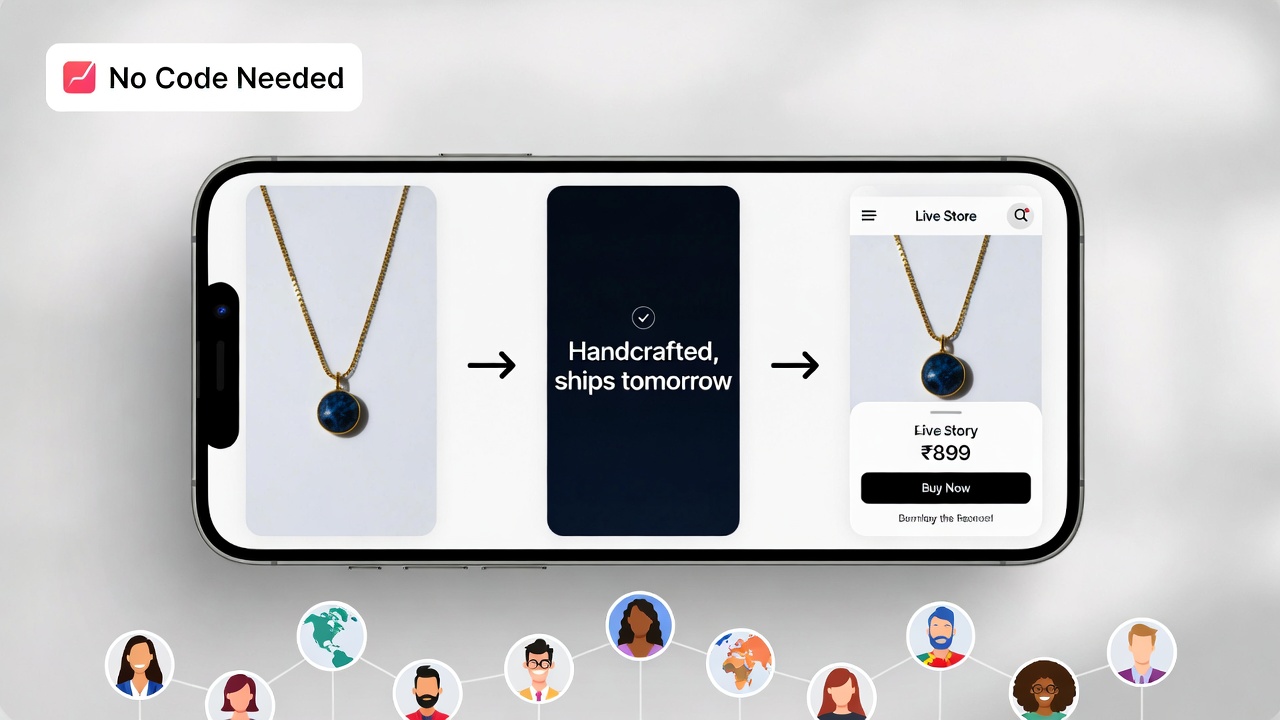
That’s it. You’re open for business.
Shopify, Etsy, Squarespace, even Instagram and Facebook shops—they’ve all been engineered to make this process as frictionless as possible. The technology problem is solved. What remains is just the decision to start.
"I'll Do It When..." Is Costing You
Listen to the excuses you might be telling yourself:
“I’ll start when I have more products.”
You don’t need fifty products. You need one. Add more over time as you learn what sells.
“I’ll start when I have better photos.”
Your first photos don’t need to be perfect. They need to be real. Customers who connect with your product will forgive amateur photography. Customers who never see your product can’t buy it at all.
“I’ll start when I have a proper brand identity.”
Brands develop over time. Some of the most successful e-commerce businesses started with nothing but a product and a description. The logo, the color palette, the “brand voice”—all of that can evolve. But it only evolves if you start.
“I’ll start when I have more time.”
You don’t have more time than you have right now. The setup takes less time than the excuses you’ve been rehearsing. The “perfect time” doesn’t exist.
Every Day You Wait, Someone Else Finds Your Customer
Here’s the uncomfortable truth: while you’re waiting to be ready, someone else is selling something similar to the customers who would have chosen you.
The internet doesn’t care about your preparation timeline. It rewards people who show up.
Your potential customer:
- Lives in a different time zone
- Is searching right now for exactly what you make
- Will buy from whoever appears in front of them
- Has no way to know you exist if you’re not online
Visibility beats perfection. A decent product that’s available beats a perfect product that’s still waiting for launch day.
What Are You Actually Building ?
Think about what an online store really is: an employee that works 24/7.
It doesn’t take breaks. It doesn’t call in sick. It processes orders while you sleep, handles inquiries while you’re at the gym, and makes sales while you’re living your life.
Even if your online store only sells one item a week to start—that’s still:
- Revenue you weren’t generating before
- Feedback you couldn’t get without customers
- Data about what works and what doesn’t
- Proof of concept for bigger moves
And here’s the thing: that one sale a week can grow. But zero sales never compound into anything.
The Learning You Can't Get Any Other Way
You can read about e-commerce forever. Blog posts, courses, YouTube tutorials—there’s endless content about how to sell online.
None of it teaches as fast as your first sale.
Your first sale teaches you:
- What questions customers actually ask
- Where your descriptions are unclear
- What shipping costs really look like
- How people find you
- What makes someone click “buy” versus bounce
You cannot learn these things in theory. You can only learn them by doing.
The entrepreneurs who succeed online aren’t smarter or more talented than you. They just started earlier. They made their mistakes, learned from them, and improved. Every day you wait is a day of learning you’re missing.
The Numbers Are On Your Side
Here’s what makes this genuinely low-risk:
Startup costs are minimal. Most platforms offer free trials or “pay when you sell” models. Your overhead approaches zero.
There’s no inventory requirement. Depending on what you sell, you might not need to stock anything. Print-on-demand, digital products, made-to-order items—all viable models that don’t require upfront investment.
You can test before you commit. Don’t know if anyone will buy? Put up a listing and find out. Real market feedback beats speculation every time.
Iteration is cheap. Wrong price? Change it. Bad photo? Replace it. Description not working? Rewrite it. Nothing you do on day one is permanent.
The traditional barriers to starting a business—significant capital, physical location, inventory investment—simply don’t apply to starting online.
The Platform Question (Keep It Simple)
If you’re paralyzed by which platform to use, here’s a quick guide:
If you make physical handmade products: Start with Etsy. Built-in audience, easy setup, marketplace traffic.
If you have digital products (guides, templates, courses): Gumroad or Payhip. Near-zero friction to start.
If you want your own storefront: Shopify or Squarespace Commerce. More setup, but you own the brand experience.
If you already have an Instagram following: Instagram Shopping. Sell directly where people already follow you.
If you’re truly starting from zero: A “link in bio” tool like Stan Store or Beacons gives you a landing page and checkout immediately.
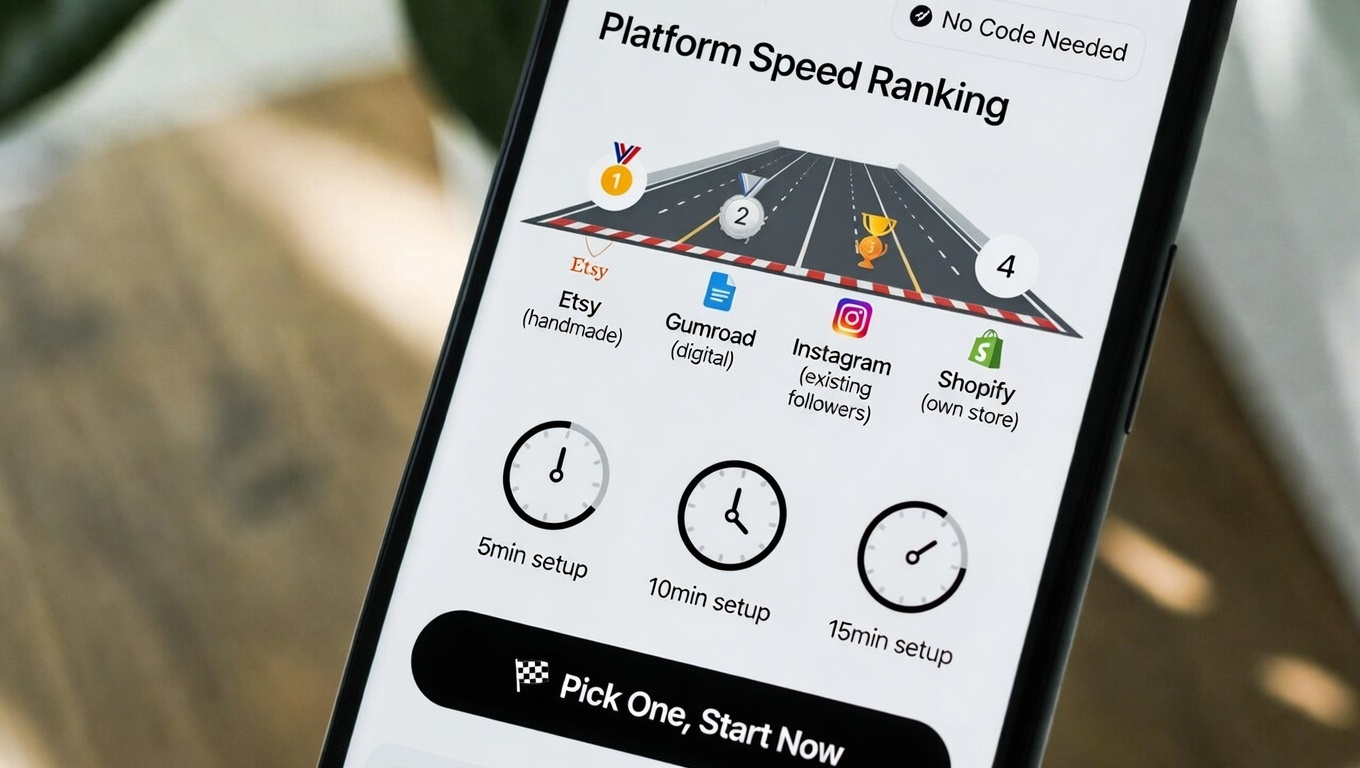
The honest truth: The platform matters less than starting. Pick one, launch, and migrate later if you need to. Nobody has ever failed because they chose Shopify instead of Squarespace. People fail by never choosing anything.
What Can You Do in the Next Five Minutes ?
Right now, you could spend five minutes scrolling your phone, or you could spend five minutes starting something.
Here’s the challenge:
- Pick one product you could sell. Just one.
- Take a photo with your phone. Right now.
- Write three sentences about what it is and why someone would want it.
- Open Etsy, Gumroad, or whatever platform makes sense and start a listing.
You don’t have to finish. You just have to start. Once you’ve begun, the momentum carries you forward. It’s starting that’s hard.
Five minutes. That’s the distance between “thinking about selling online” and “having an online store.”
The Story You Could Tell Later
Imagine yourself a year from now.
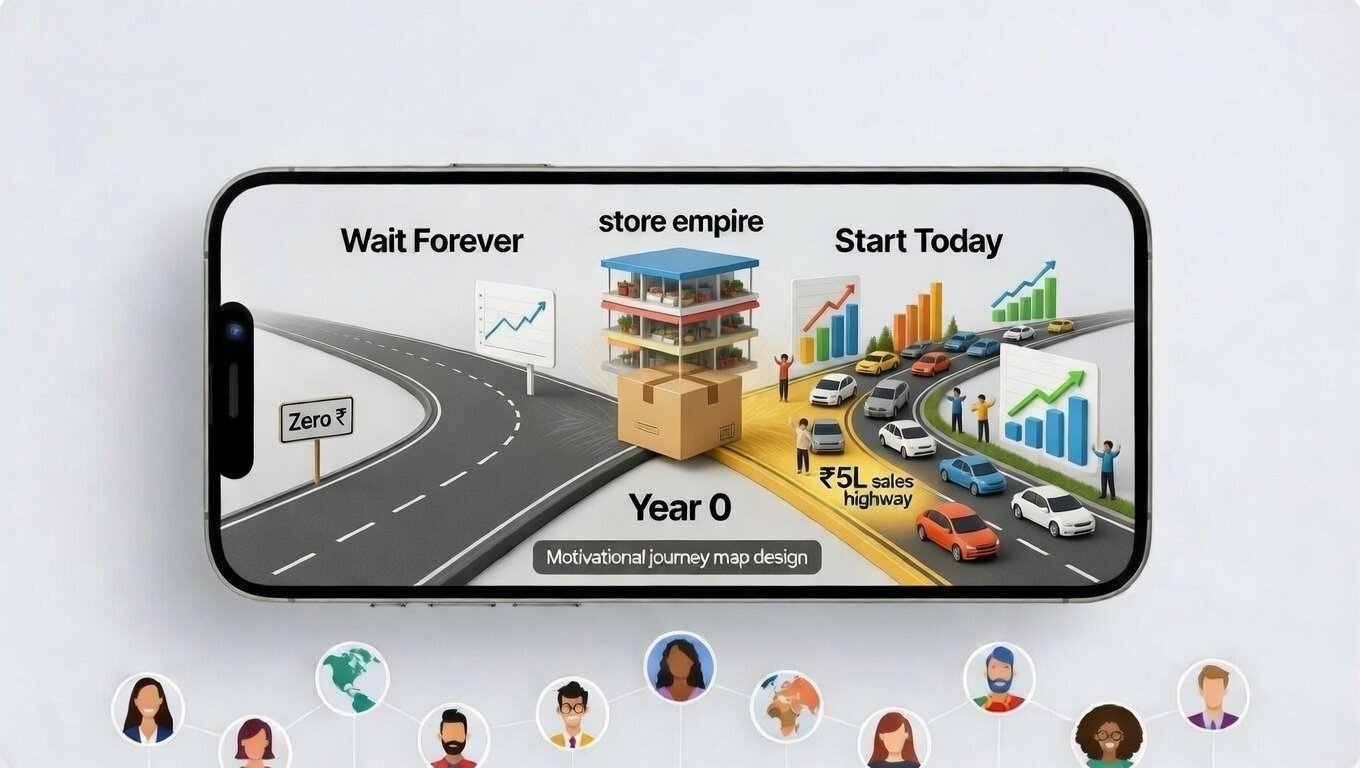
In one version, you’re still thinking about starting. Still waiting for the right time. Still nodding when people say you should sell online, still agreeing, still doing nothing about it.
In another version, you have a year of data. You know what sells and what doesn’t. You’ve built a customer base. You’ve learned things you couldn’t have learned any other way. You’re expanding into new products, new markets, new possibilities.
The only difference between those two futures is what you do today.
The Final Question
What would you need to believe to start today?
Would you need to believe that technology is easy? (It is.) Would you need to believe the risk is low? (It is.) Would you need to believe there’s demand? (The only way to find out is to test.) Would you need to believe you have time? (You have five minutes.)
Whatever you’re waiting for, you already have enough to begin.
The question isn’t whether you should sell online. You already know the answer to that.
The question is: what’s actually stopping you?
Frequently Asked Questions
How long does it really take to set up an online store? On platforms like Etsy, Gumroad, or Instagram Shopping, you can have a product listed and ready to sell in under 30 minutes—often less. The technical setup that used to take weeks now takes minutes. The main investment is creating your product listing (photo, description, price).
Do I need many products to start selling online? No. You can start with a single product. Many successful online sellers started with just one item, then expanded based on what they learned from actual customer feedback. Having a larger catalog can help, but it’s not required to begin.
What if my photos aren’t professional quality? Start with what you have. Smartphone photos in natural light are often good enough, especially on platforms like Etsy where authenticity can be an advantage. You can upgrade photography over time. Imperfect photos that exist beat perfect photos that don’t.
Which platform should I use to sell online? It depends on what you sell. Etsy works well for handmade and vintage items. Gumroad and Payhip suit digital products. Shopify and Squarespace provide full storefronts. Instagram Shopping works if you have an existing following. The best platform is the one you’ll actually use.
How much does it cost to start selling online? Many platforms offer free trials or take a percentage of sales rather than charging upfront fees. Your startup cost can be effectively zero until you actually sell something. This is dramatically different from traditional retail, where significant investment is required before the first customer arrives.
What if nobody buys anything? Then you’ve learned valuable information at essentially no cost. Zero sales tells you something about your product, pricing, description, or marketing—information you can act on. The only true failure is never finding out what would happen.
Ready to take your products online with a real strategy behind them? AI Marketing Technology helps businesses build their online presence that actually converts—from launch to scale.
