Here’s a scenario that happens more often than you’d think:
A potential customer finds your business on a directory. They see you’re listed as “Open.” They drive across town. Your doors are locked because your hours weren’t updated.
That customer is gone. Forever. And they might leave a frustrated one-star review on their way out.
Inconsistent business listings are a silent killer of local businesses. They don’t announce themselves. They just quietly drain your SEO rankings, erode customer trust, and throw away leads while you wonder why your marketing isn’t working.
Let’s talk about why consistency matters more than most business owners realize—and how to fix it.
What We Mean by "Consistent Listings" ?
Your business exists in more places than just your website. Your NAP (Name, Address, Phone Number) information is scattered across:
- Google Business Profile
- Yelp
- Apple Maps
- Bing Places
- Industry-specific directories
- Local chamber of commerce listings
- Data aggregators you’ve never heard of
Many business owners treat these listings as a “set it and forget it” task. They register once and never look back.
This is a mistake that compounds over time.
Addresses change. Phone numbers update. Hours shift. New locations open. And every inconsistency creates problems you don’t see until the damage is done.
Why Google Cares About Consistency ?
Search engines prioritize trust. When your business information is identical across dozens of platforms, Google views your business as legitimate and reliable.
Here’s what happens when it’s not:
The Algorithm Problem:
Google sees “123 Main St.” on your website but “123 Main Street, Suite A” on Yelp. Is that the same business? A different location? Did something change? Google doesn’t know—and uncertainty makes Google nervous.
The Result:
To protect the user experience, Google may lower your ranking because it isn’t 100% sure which information is correct. The search engine would rather show a competitor with consistent data than risk sending a user to the wrong address.
What Consistency Unlocks:
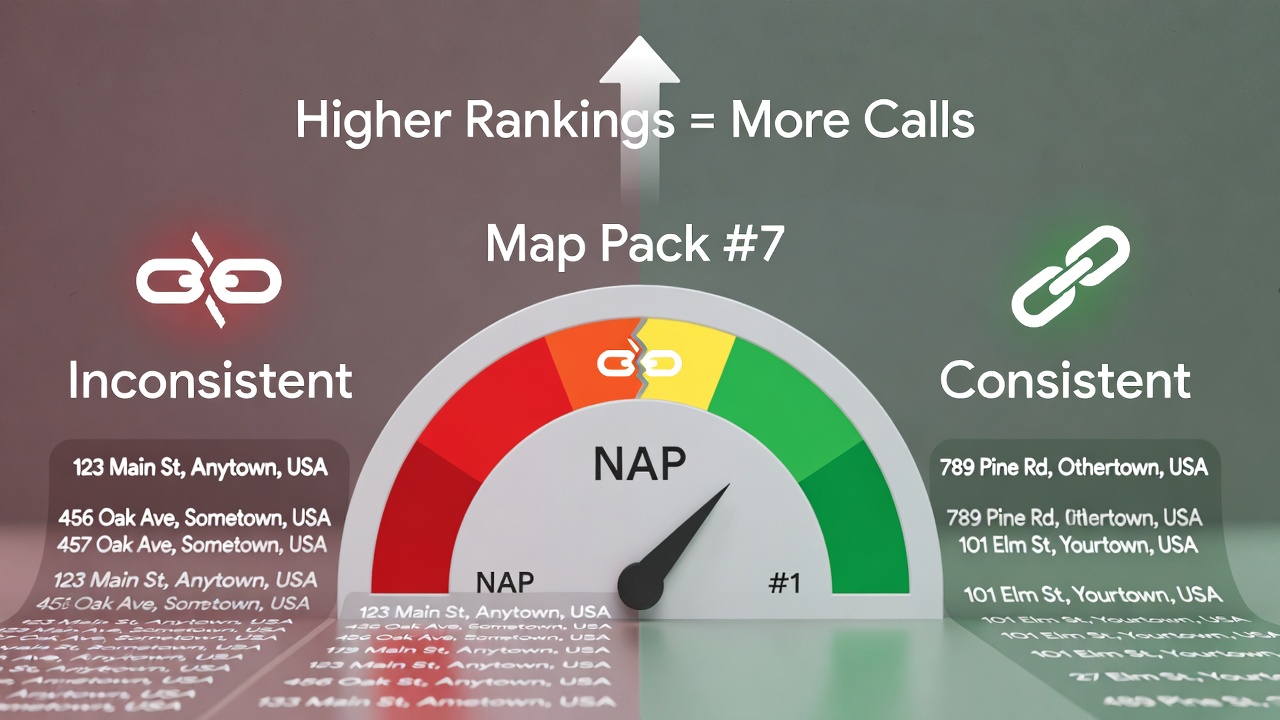
- Higher rankings in the Local Map Pack (the three businesses shown with a map)
- Better visibility in “near me” searches
- More confidence from Google’s algorithm
- Improved citations from data aggregators
Consistency doesn’t guarantee top rankings—but inconsistency almost guarantees you won’t get them.
The Customer Trust Factor
Beyond algorithms, there’s a human element that matters even more.
First Impressions Are Digital
Before a customer walks through your door, they’ve already made judgments based on what they found online:
- Is the website current or does it look abandoned?
- Are the hours accurate or are they from 2019?
- Do the reviews match the experience they’re expecting?
- Does the phone number work?
A clean, uniform presence signals professionalism. It tells customers you’re attentive to detail and actively managing your business.
The Cost of Friction
Every inconsistency adds friction:
- Wrong phone numbers mean lost calls
- Outdated hours mean frustrated customers
- Incorrect addresses mean wasted trips
- Conflicting information creates doubt
And doubt doesn’t lead to purchases. Doubt leads to choosing the competitor with the cleaner online presence.
The Trust Multiplier
When customers find identical information everywhere they look, it creates subconscious trust. They don’t notice it’s consistent—they just feel confident doing business with you.
That confidence converts into calls, visits, and purchases.
The Digital Footprint Effect
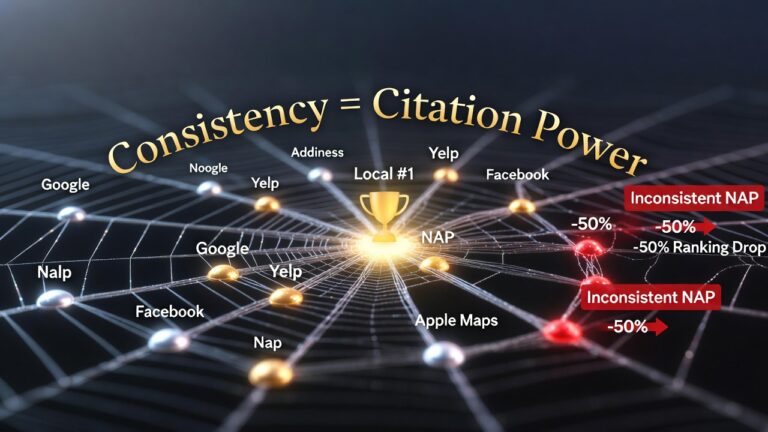
Every listing is a digital breadcrumb leading back to your business. Consistent listings create a unified “web” of data that:
Increases Your Domain Authority
When multiple authoritative directories link to your website with consistent information, it strengthens your overall SEO. These citations (mentions of your business with correct NAP data) act as trust signals to search engines.
Creates Omnipresent Visibility
No matter where a customer hangs out online—Facebook, Bing, TripAdvisor, Apple Maps—they find the same correct information. Your business becomes easy to reach regardless of their preferred platform.
Feeds AI Systems Correct Information
In 2026, AI assistants increasingly answer local queries. ChatGPT, Google Assistant, Siri, Alexa—they pull from the same databases as search engines. Consistent information means AI systems confidently recommend your business. Inconsistencies mean they hedge or skip you entirely.
The Direct Impact on Conversions
Let’s get concrete about what inconsistency costs you.
The Math:
If your phone number is wrong on 20% of your listings, you’re essentially throwing away 20% of potential leads from those platforms.
If your hours are wrong and 10% of potential customers arrive when you’re closed, that’s 10% of foot traffic lost—plus the negative reviews that follow.
If your address variations confuse Google enough to drop you from #2 to #7 In the local search, you might lose 50%+ of clicks from local queries.
The Fix:
Consistent listings remove barriers between “searching” and “buying.” They ensure that no matter where someone finds you, they find the right way to contact you.
How to Audit Your Business Listings ?
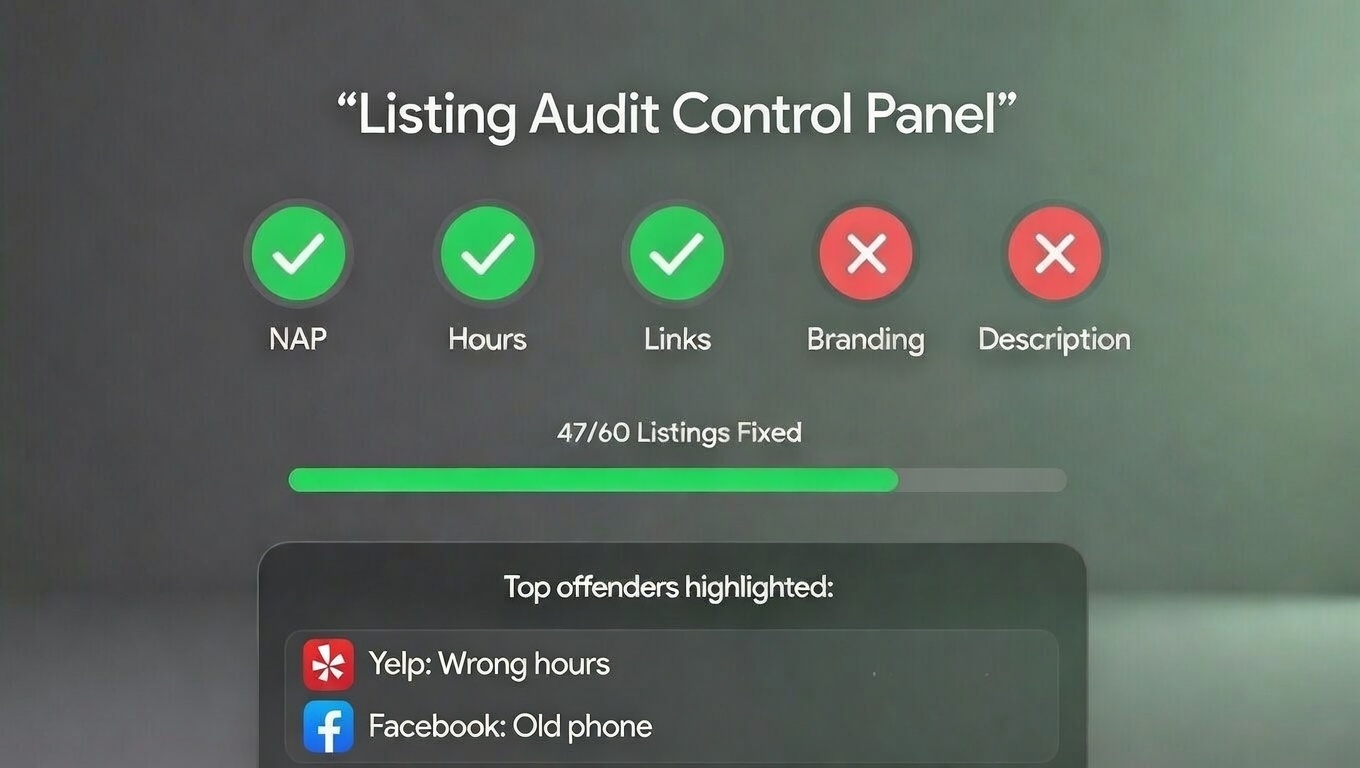
If you haven’t checked your listings lately, here’s a practical checklist:
1. NAP Consistency
Is your Name, Address, and Phone number identical everywhere?
Common inconsistencies to check:
- “Street” vs. “St.”
- “Suite A” included or excluded
- Parentheses in phone numbers vs. dashes
- Business name with or without LLC/Inc.
- Old phone numbers from previous systems
The fix: Pick one format and use it everywhere, exactly.
2. Operating Hours
Are your hours current—including holiday schedules and seasonal changes?
Check specifically:
- Weekday hours
- Weekend hours
- Holiday exceptions
- Special hours (lunch closures, etc.)
The fix: Set calendar reminders to update hours before major holidays.
3. Website Links
Does every link lead to a live page?
Check for:
- 404 errors
- Redirects to wrong pages
- HTTP vs. HTTPS issues
- Outdated landing pages
The fix: Click every link yourself. Test from mobile.
4. Visual Branding
Are you using the same logo, photos, and branding everywhere?
Check for:
- Old logos still appearing
- Different quality images across platforms
- Inconsistent brand colors or descriptions
The fix: Create a “listing kit” with approved assets to use everywhere.
5. Business Description
Is your description accurate and consistent?
Check for:
- Outdated services
- Discontinued products
- Old team member names
- Changed specialties
The fix: Write one core description and adapt it for character limits.
Automation: The Consistency Multiplier
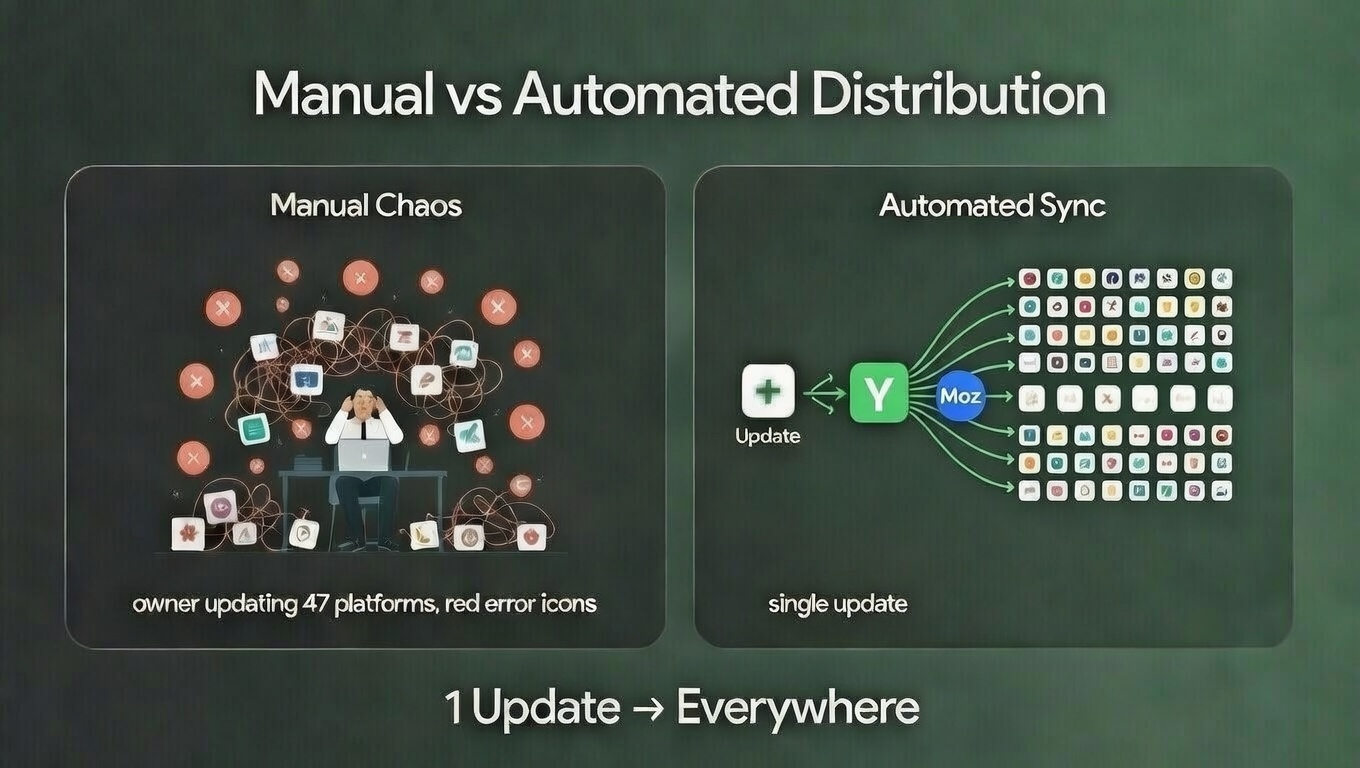
Manually managing dozens of listings is a recipe for inconsistency. Humans forget. Platforms get neglected. Updates get missed.
Tools that help:
- Yext, Moz Local, BrightLocal: Push updates to multiple platforms simultaneously
- Semrush Listing Management: Automated distribution and monitoring
- Google Business Profile API integrations: Keep your primary listing synced with your systems
The investment in listing management tools pays for itself in reduced errors, saved time, and improved rankings.
The AI Visibility Connection
Here’s something most businesses haven’t realized yet: AI systems rely heavily on the same data sources as search engines.
When ChatGPT recommends a local business, it’s drawing from databases that include your directory listings. When Google’s AI Overview answers “best pizza near me,” it’s weighing consistency and citations.
Inconsistent listings don’t just hurt traditional search—they make you invisible to AI discovery.
In a world where more and more queries are answered by AI without the user clicking anything, getting your information right everywhere matters more than ever.
The Bottom Line
In the digital marketplace, consistency is clarity.
By ensuring your business information is uniform across the web, you’re not just pleasing an algorithm. You’re making it easier for customers to:
- Find you — accurate information everywhere
- Trust you — professional, managed presence
- Contact you — correct details eliminate friction
- Buy from you — confidence removes barriers
The businesses that dominate local search aren’t always the best at their craft. They’re the ones who made it easiest for customers to discover and contact them.
Consistent listings are the foundation everything else builds on.
How AI Marketing Technology Manages Listings?
At AI Marketing Technology, listing consistency is a core part of our Local SEO service.
We provide:
Comprehensive Audits: Complete review of all your listings across 50+ platforms
Automated Syndication: Push correct information to directories, data aggregators, and platforms simultaneously
Ongoing Monitoring: Continuous checks for inconsistencies, unauthorized changes, or new platforms
Holiday & Seasonal Updates: Proactive hour updates before you forget
AI Visibility Optimization: Ensuring your data is structured for AI system recommendations, not just traditional search
Your listings are the foundation. We make sure that foundation is solid.
Frequently Asked Questions
What is NAP consistency and why does it matter? NAP stands for Name, Address, Phone—the core identifying information for your business. Consistency means this information is identical across every online directory, platform, and listing. It matters because search engines use NAP consistency as a trust signal, and inconsistencies confuse both algorithms and customers.
How does listing consistency affect local SEO rankings? Search engines like Google verify business legitimacy by cross-referencing information across multiple sources. When data is consistent, it signals trustworthiness and can improve your position in local search results and the Google Map Pack. Inconsistencies create doubt and can lower rankings.
How many business directories should I be listed on? Most local businesses benefit from appearing on 40-60 relevant directories, including Google Business Profile, Yelp, Facebook, Apple Maps, Bing Places, industry-specific directories, and local platforms. Quality and consistency matter more than sheer quantity.
How often should I audit my business listings? Conduct a full audit quarterly, with additional checks before major holidays or after any business changes (new location, phone number, hours). Use automated tools to monitor for unauthorized changes between audits.
Can I manage listings myself or do I need tools? You can manage listings manually if you have limited platforms (under 10), but tools become essential at scale. Manual management invites human error and forgotten updates. Listing management platforms pay for themselves in accuracy and time savings.
What should I do if I find incorrect listings I can’t edit? For listings you don’t control, submit correction requests through the platform’s business editing process. For stubborn listings, document the correct information clearly on platforms you control, and consider using data aggregators (Factual, Infogroup) to push correct data downstream.
Ready to audit your business listings and build a solid local SEO foundation? Contact AI Marketing Technology to discuss our listing management solutions.
