

“So… is this working?”
If you’ve ever hired a marketing agency or invested in digital campaigns, you’ve probably found yourself asking that question while staring at a report full of numbers that don’t quite connect to your bank account.
Impressions. Reach. Engagement rate. Click-through percentage.
They sound impressive in reports. But when you ask how they translate to actual revenue, the answer often gets fuzzy.
Here’s the truth: In 2026, clients aren’t satisfied with vague promises of “brand awareness.” They want to see the ROI. And if you’re selling digital marketing services—or buying them—your ability to prove value through tangible metrics is what separates a one-time project from a long-term partnership.
Let’s talk about how to move beyond vanity metrics and measure what actually matters.
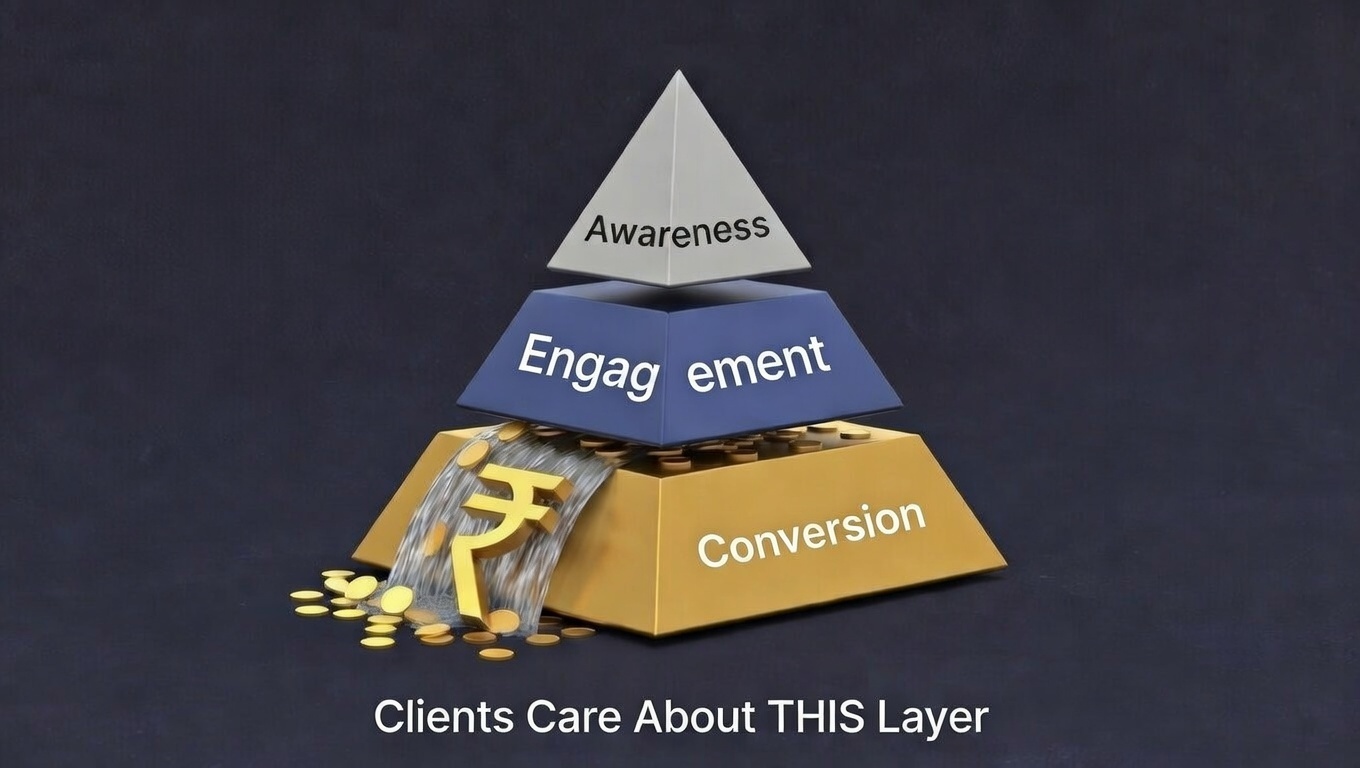
The Three Buckets of Marketing Metrics
Not all data is created equal. Before diving into specific numbers, understand that metrics fall into three distinct categories:
Bucket 1: Awareness Metrics (Top of Funnel)
These measure how many people see your content:
- Impressions
- Reach
- Share of voice
- Brand mentions
What they tell you: How visible you are. How much attention you’re capturing.
What they don’t tell you: Whether that visibility leads to anything.
Bucket 2: Engagement Metrics (Middle of Funnel)
These measure how people interact with your content:
- Click-through rate (CTR)
- Time on site
- Pages per session
- Social media comments and shares
- Email open rates
What they tell you: How interesting or relevant your content is.
What they don’t tell you: Whether that interest converts to business value.
Bucket 3: Conversion Metrics (Bottom Line)
These measure actual business outcomes:
- Cost Per Lead (CPL)
- Customer Acquisition Cost (CAC)
- Return on Ad Spend (ROAS)
- Conversion rate
- Revenue attributed to campaigns
What they tell you: Whether your marketing is actually generating business.
Pro tip: Always lead with conversion metrics. While impressions are nice, your clients (and your boss) care most about how many dollars came back for every dollar spent.
The Missing Link: Closed-Loop Reporting
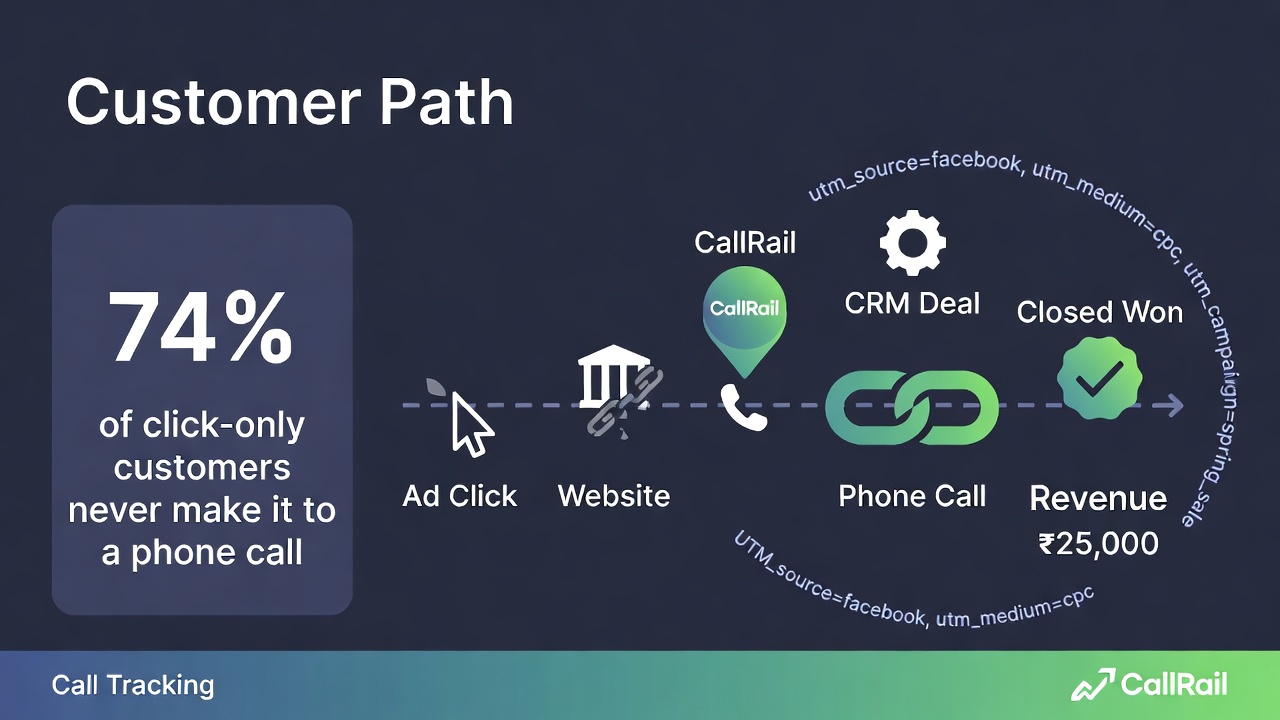
Here’s the biggest challenge in digital marketing measurement: the gap between a click and a sale.
Someone clicks your ad. Great. But then they:
- Browse your website
- Leave without converting
- Come back a week later via organic search
- Call your office from their phone
- Become a customer after a sales conversation
Which touchpoint gets credit? If you’re only tracking the click, you’re missing most of the story.
Closed-Loop Reporting bridges this gap.
How to Implement It ?
- Integrate Your CRM with Analytics
Connect tools like HubSpot, Salesforce, or Pipedrive with Google Analytics 4 (GA4). This lets you trace a customer’s journey from first click to closed deal.
- Track Offline Conversions
If a digital ad leads to a phone call that closes a week later, use call-tracking software (like CallRail or Infinity) to attribute that revenue back to the specific campaign.
- Use UTM Parameters Religiously
Tag every link with UTM codes so you can identify exactly which campaign, medium, and content drove each conversion.
The Goal:
You want to be able to say: “This specific $500 ad spend resulted in $2,500 of closed revenue”—not just “This ad got 100 clicks.”
Context Is Everything: Comparative Benchmarking
A number in a vacuum means nothing.
“We got 10,000 impressions this month.” Is that good? Bad? Average? It depends.
To make metrics tangible, you need context. Use three types of comparisons:
Period-over-Period (PoP)
How are you performing compared to last month? Last quarter?
This shows trajectory. Are things improving or declining?
Year-over-Year (YoY)
How do the results compare to the same period last year?
This accounts for seasonality. Black Friday traffic in November should compare to last November, not October.
Industry Benchmarks
How does the client stack up against competitors?
A 2% conversion rate might be excellent in luxury goods but mediocre in SaaS. Benchmark data provides essential context.
Comparison Type | What It Demonstrates |
Period-over-Period | Short-term trajectory and trends |
Year-over-Year | Performance accounting for seasonality |
Industry Benchmarks | Competitive positioning |
Visualizing Data (The Golden Rule)
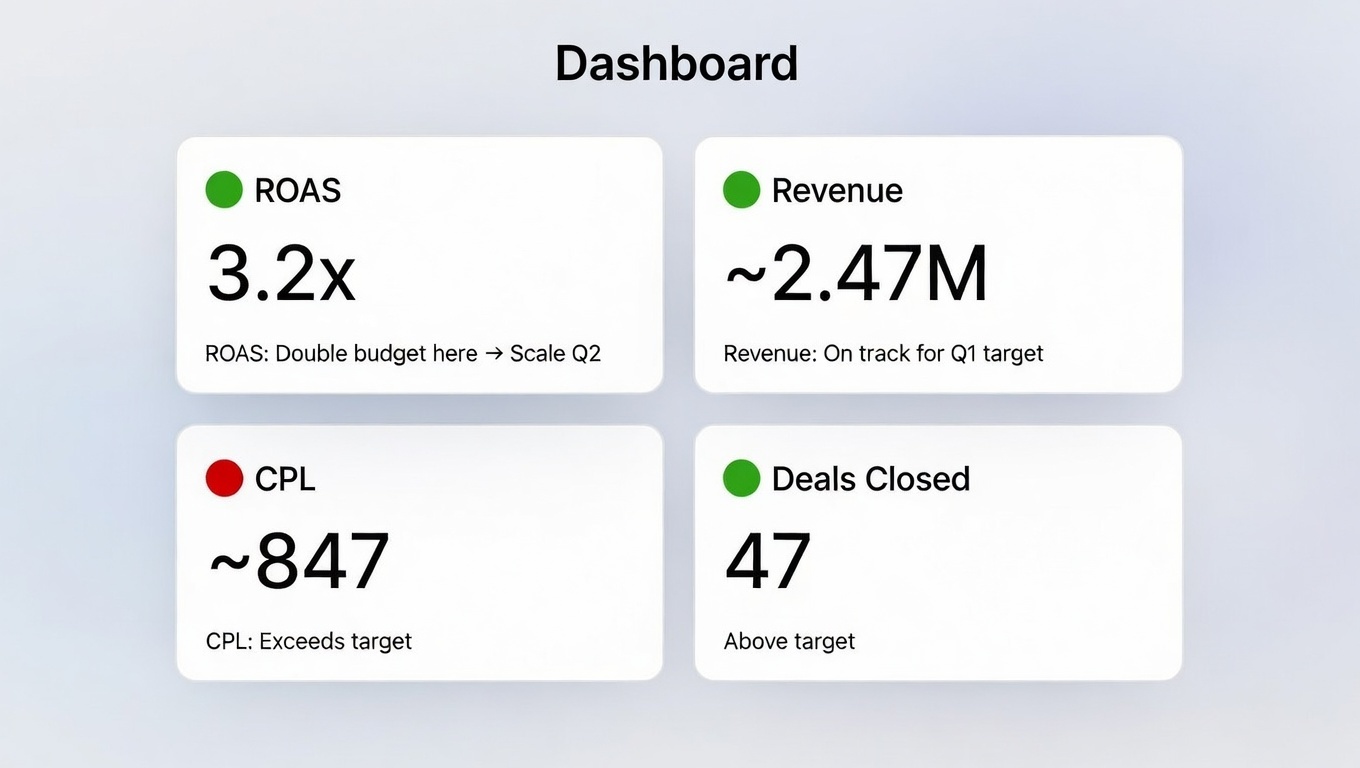
Humans are visual creatures. A spreadsheet with 50 columns is overwhelming. A clean dashboard is empowering.
Avoid Data Puking
Don’t report on everything. Report on the 3-5 Key Performance Indicators (KPIs) that align with the client’s business goals.
If they care about leads, show leads. If they care about revenue, show revenue. If they care about brand awareness, show reach and share of voice.
More data ≠ better reporting.
Use Visual Proof
For website optimization, tools like Hotjar or Microsoft Clarity provide heatmaps and session recordings. These make abstract “UX improvements” tangible—you can literally see where users click, scroll, and get stuck.
The "So What?" Factor
Every chart should include a one-sentence summary explaining: 1. What the trend shows 2. Why it matters 3. What action you’ll take next
Numbers without narrative are just noise.
The Hidden Metrics Nobody Talks About
Sometimes the value of digital marketing isn’t in new sales—it’s in efficiency, retention, and operational improvements.
Customer Lifetime Value (CLV)
Are your retention campaigns increasing the long-term value of existing customers?
If average customer value increased from $500 to $750 over two years, that’s attributable to marketing—even if it didn’t come from new acquisition campaigns.
Churn Reduction
Did improved customer communication reduce cancellations?
Show the decrease in lost subscribers or customers. Calculate the revenue saved by customers who didn’t leave.
Time and Cost Savings
How many hours did automated lead nurturing save the sales team?
How much faster are campaigns launching with new tools?
These operational efficiencies are real ROI—even if they don’t show up directly in revenue reports.
Brand Lift (When It Matters)
For brand awareness campaigns, measure:
- Direct traffic increases (people typing your URL)
- Branded search volume (people searching your company name)
- Share of voice compared to competitors
These indicate growing brand recognition, which eventually translates to easier sales cycles and higher close rates.
Building Reports That Build Trust
The way you present metrics matters as much as the metrics themselves.
Start With the Bottom Line
Don’t bury the revenue numbers on page 12. Lead with what matters most: business outcomes, ROI, revenue generated.
If the bottom line is strong, everything else is context. If it’s weak, the supporting metrics explain why—and what you’re doing about it.
Acknowledge What Isn't Working
Transparency builds trust faster than spin.
If a campaign underperformed, say so. Explain what you learned and how you’re adjusting. Clients can handle bad news; they can’t handle feeling misled.
Connect Activities to Outcomes
Don’t just report what you did (“We posted 12 blogs and sent 4 email campaigns”). Connect those activities to results (“Those blogs generated 847 organic visits, 23 leads, and 3 closed deals”).
Activity reports feel like justification. Outcome reports feel like accountability.
Make Recommendations Actionable
Every report should answer: “What should we do next?”
Based on this month’s data, what’s the recommendation? More budget here? Less there? New experiment to try? Keep what’s working?
Metrics without direction are just numbers.
The Ultimate Metric: Are You Becoming a Strategic Partner ?
Here’s the honest truth about tangible metrics: They’re about accountability.
When you provide clear, honest, goal-oriented data, you stop being a “vendor” and start being a “strategic partner.”
Vendors deliver services and send invoices.
Partners deliver measurable outcomes and strategic recommendations.
The difference shows up in client retention, referrals, and the willingness to invest more. That’s the ultimate metric of whether your reporting is working.
How AI Marketing Technology Approaches Measurement ?
At AI Marketing Technology, we believe that what gets measured gets improved—and what gets reported clearly gets understood.
Our approach includes:
Closed-Loop Attribution: We connect your digital marketing activities to actual revenue through CRM integration, call tracking, and comprehensive UTM frameworks.
Real-Time Dashboards: Clean visualizations that focus on the metrics that matter for your business—not vanity numbers that look good in reports.
Transparent Reporting: We tell you what’s working, what isn’t, and what we’re doing about it. No spin. No data dumping. Just honest analysis.
Actionable Insights: Every report includes clear recommendations for what to do next, based on what the data actually shows.
Because tangible metrics aren’t just nice to have—they’re the foundation of marketing that actually delivers.
Frequently Asked Questions
What are the most important digital marketing metrics to track? Conversion metrics matter most: Cost Per Lead (CPL), Customer Acquisition Cost (CAC), Return on Ad Spend (ROAS), and revenue attributed to campaigns. These connect marketing activities to business outcomes. Awareness and engagement metrics provide context but shouldn’t be the primary focus.
What is closed-loop reporting in digital marketing? Closed-loop reporting connects marketing activities to final sales outcomes by integrating CRM data with analytics platforms. It bridges the gap between “clicks” and “closed deals,” allowing you to attribute revenue to specific campaigns and touchpoints.
How do I prove marketing ROI to stakeholders who only care about revenue? Focus on bottom-line metrics: revenue generated, deals closed, and cost per acquisition. Use closed-loop reporting to connect campaigns to actual sales. Express results in terms of ROI (dollars returned per dollar spent) rather than engagement metrics.
What’s the difference between vanity metrics and actionable metrics? Vanity metrics (impressions, followers, likes) look impressive but don’t connect to business outcomes. Actionable metrics (conversion rate, cost per lead, revenue attributed) directly measure business impact and inform strategic decisions.
How often should digital marketing performance be reported? Weekly check-ins for campaign adjustments, monthly reports for performance review, and quarterly deep-dives for strategic analysis. The frequency should match the pace of decision-making—fast-moving campaigns need faster reporting.
What tools are best for tracking digital marketing ROI? Essential tools include: Google Analytics 4 for web analytics, a CRM (HubSpot, Salesforce, Pipedrive) for lead and revenue tracking, call tracking software (CallRail, Infinity), and dashboard tools (Google Looker Studio, Databox) for visualization.
Ready for digital marketing that proves its value with metrics that actually matter? Contact AI Marketing Technology to discuss how we measure success.
